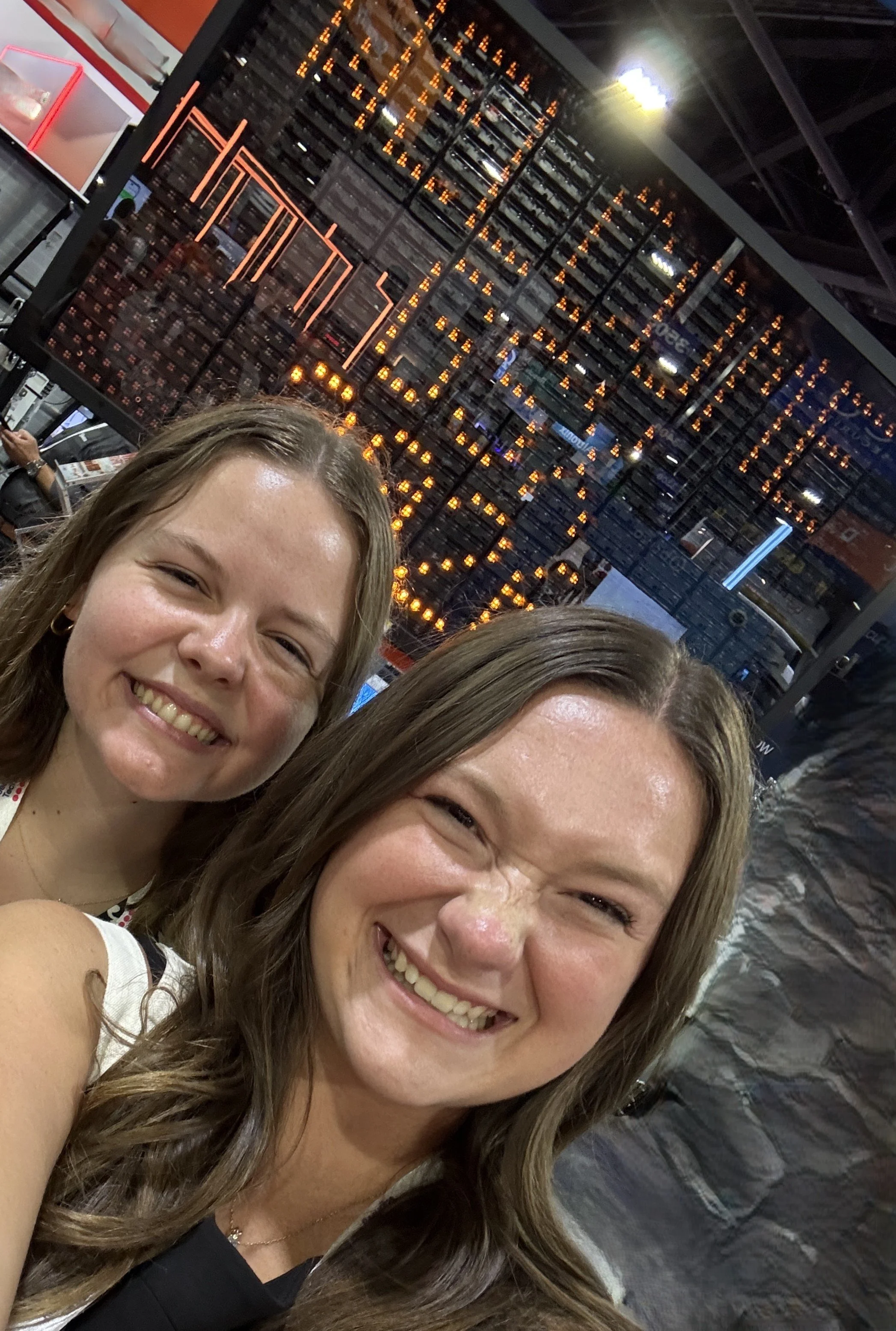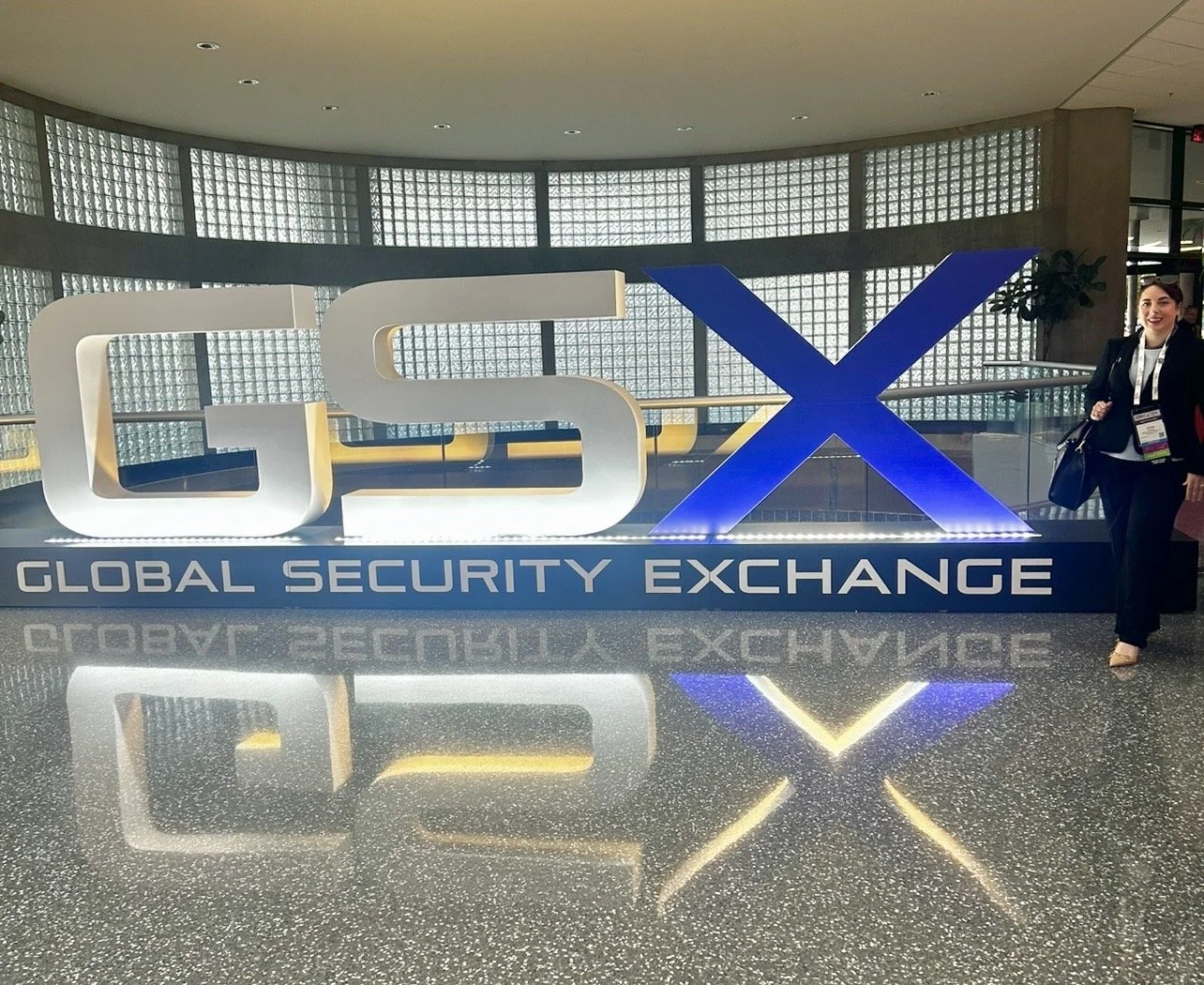
A Decade of GSX: A New Milestone for Safeguards Consulting

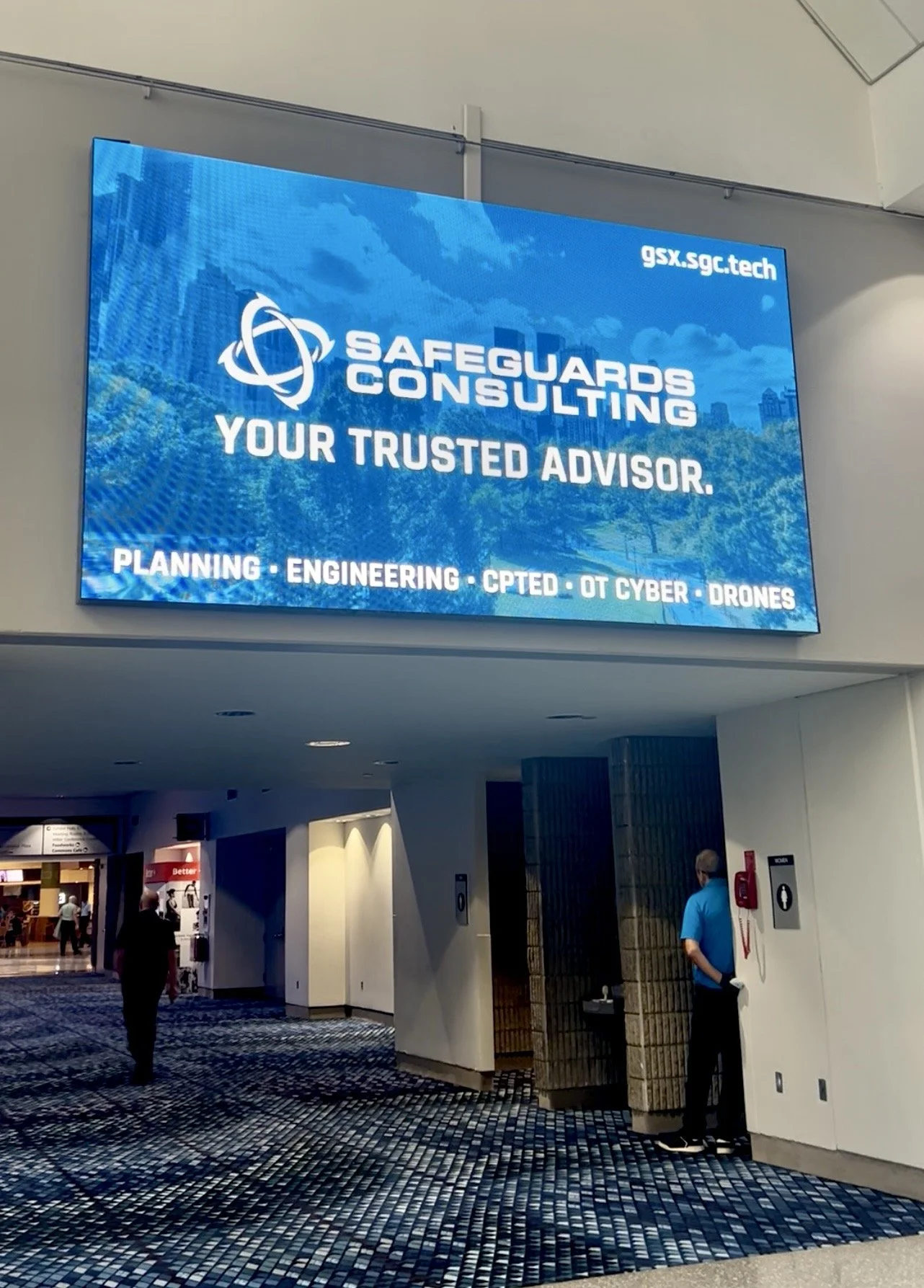
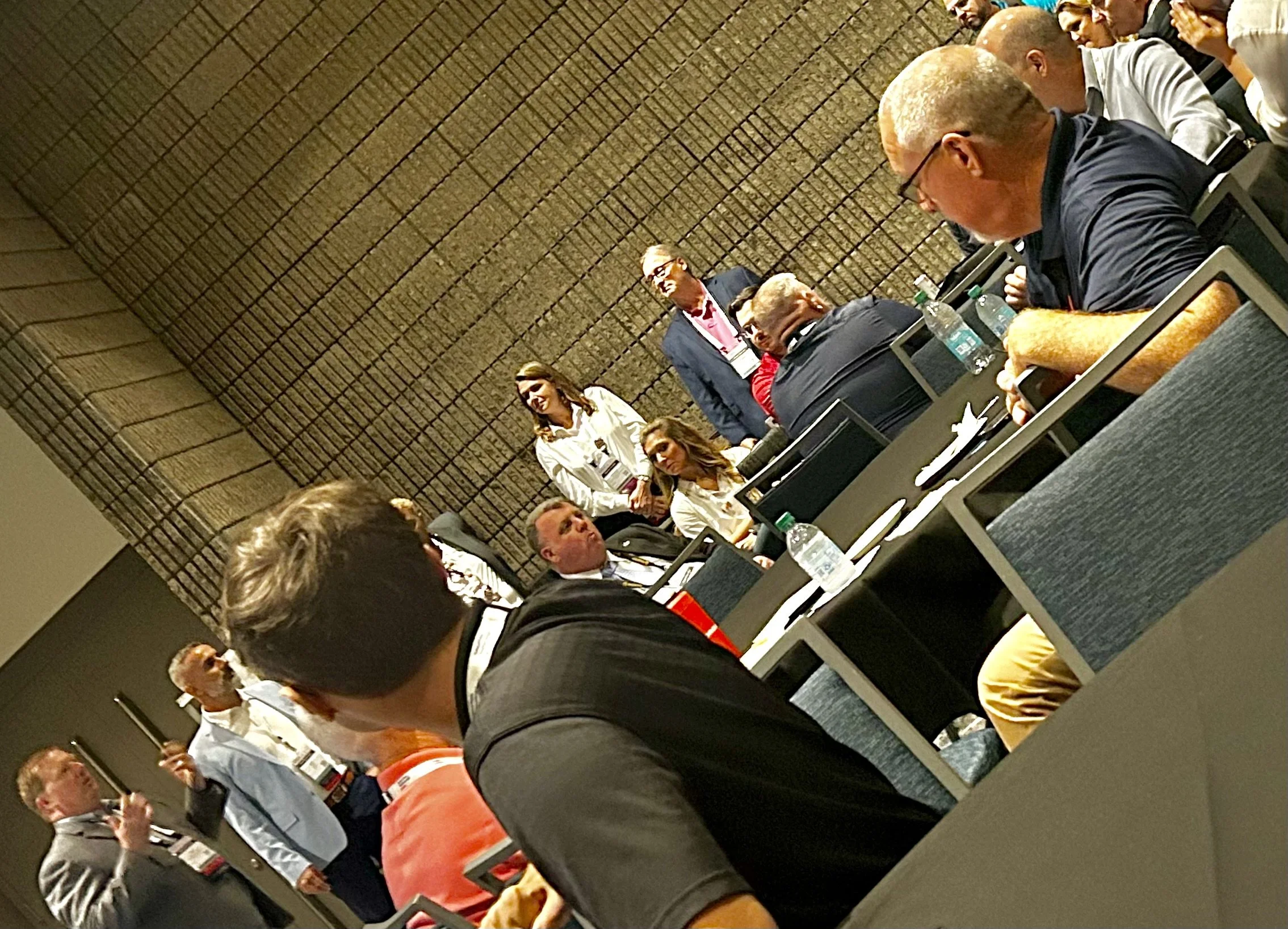
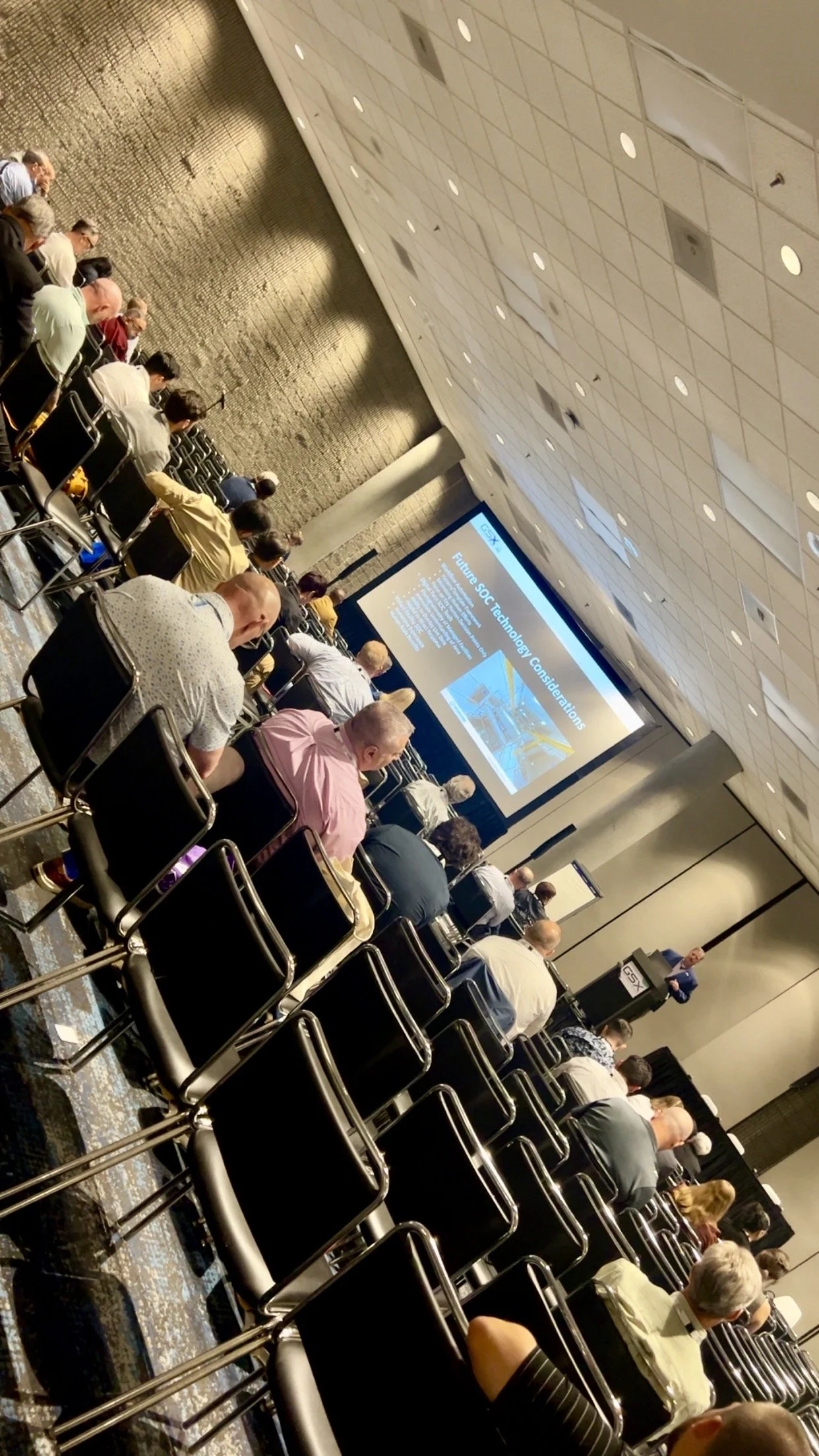
For over 10 years, our team has attended the Global Security Exchange (GSX) Conference by ASIS International. This conference brings together security professionals, manufacturers, and integrators to build connections across the industry. It also features a large exhibition hall showcasing emerging technology, educational sessions, and networking events. For the first time, Safeguards Consulting was honored to sponsor the GSX Conference for its 2026 gathering. Our President and Principal Consultant, Mark Schreiber, also had the honor of speaking during his pre-conference session as well as a session during the conference, and our team had the largest attendance at GSX in our firm’s history.  

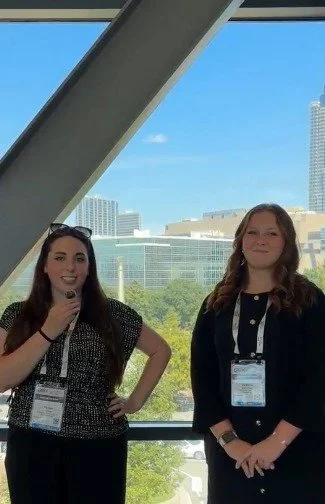
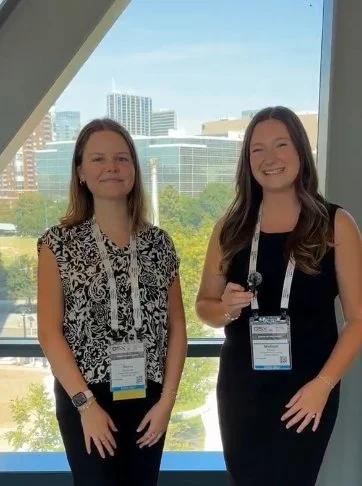
For many members of our team, participating in GSX has been a longstanding tradition. For others, the experience was just beginning. To provide an inside perspective on the conference from our first-time team members, we asked them to share some thoughts about their experience. 
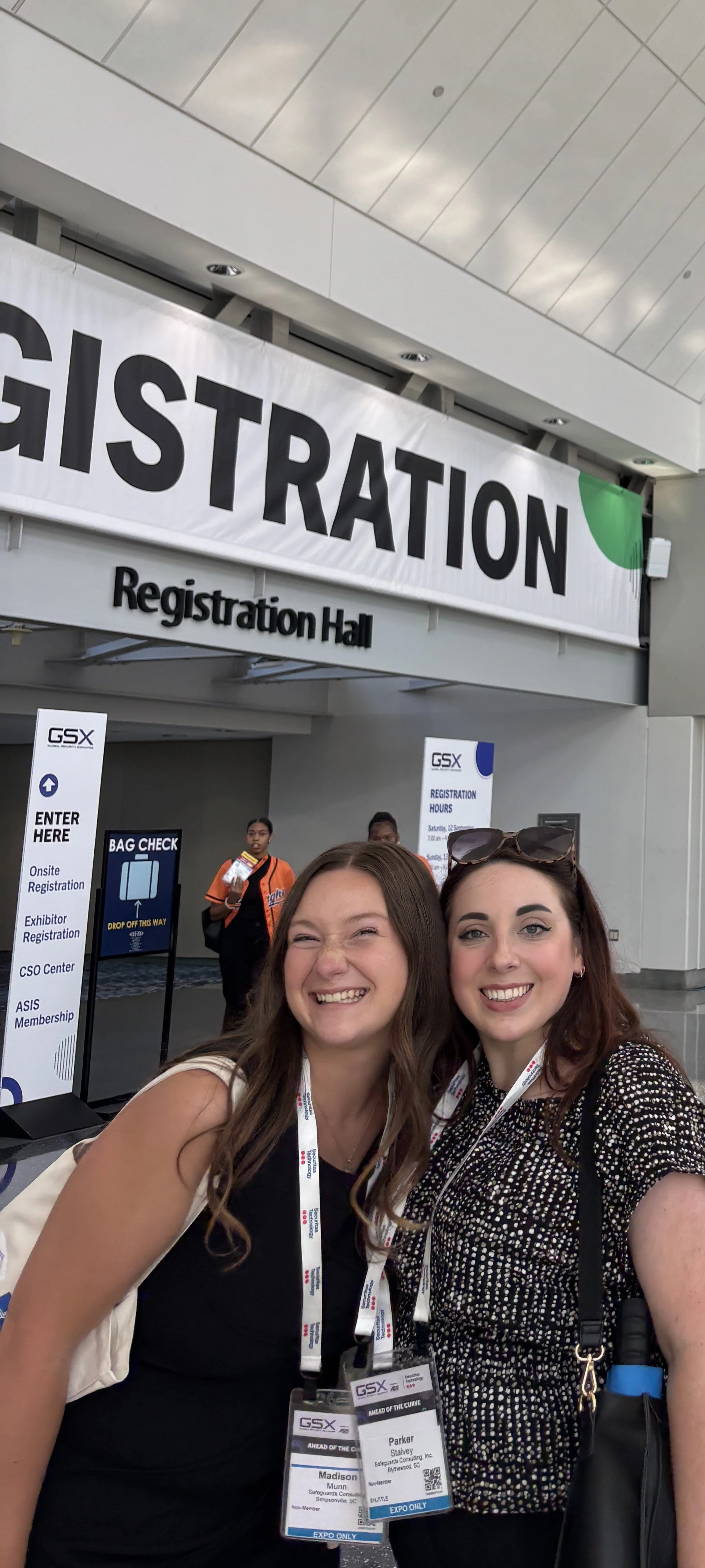
Our Team's Introduction to ASIS International, GSX, and The Security Industry 

We began the first day with “Building Your Future in Security: GSX Student Welcome & Networking Experience.”  

During the event, our younger team members were introduced to members of ASIS International and had the opportunity to begin building connections within the industry. They also received valuable advice and insights about networking, professional development, and how to make the most of their GSX experience as students and first-time conference attendees.  

One of our first-time team members, Reyna, remarked that, “It was a great time to meet other students who were also just beginning their careers and taking their first steps in the industry. We also had the unique opportunity to meet some of the leadership team at ASIS International, which was especially exciting.”  

For team members who were experiencing a professional conference for the first time, this session provided an important introduction to the value of engaging with industry professionals and stepping outside of the familiar environments of college and the workplace.  

 Exploring the Exhibit Hall: Connecting New Technologies to Our Firm's Role 

Following the student networking experience, our team participated in a tour of the GSX exhibit hall alongside our consultants.  

Throughout the tour, our consultants introduced our younger team members to various industry connections while also allowing them to explore the wide range of security technologies represented throughout the exhibit hall. Rather than simply walking through the exhibits, our consultants used the experience as an opportunity to explain the technologies our team encountered and provide context about how different products and systems can be applied within the security industry.  

Our team also had the opportunity to participate in several demonstrations, allowing our younger professionals to see firsthand how different technologies operate and how they may be incorporated into real-world security environments.  

One of our part-time employees stated this walking into the Exhibit Hall for the first time, "Personally, I feel that the most helpful thing I learned was the connection to the companies and what products they offer/sell and how they connect to Safeguards. I think that being able to see all the different types of security products helped me understand the service our company provides!” 

For our interns and newer employees, this part of the conference provided a hands-on introduction to an industry that they are only beginning to explore professionally.  

A Quick Detour of The Peach State: Beyond the Conference Floor 

After completing our exhibit hall tour, the team took some time away from the conference floor for lunch and team bonding at Ted's Montana Grill, followed by a brief walk through Centennial Olympic Park.  

While these moments were not directly related to the educational programming at GSX, they were an important part of the overall experience. Conferences provide opportunities not only to learn and network, but also to strengthen relationships among the people we work alongside every day.  

Investing in Our Future Security Operations and Marketing Industry Leaders  

Once we returned to the conference, our team split into different groups based on their roles and objectives for the remainder of the day.  

Our marketing staff continued exploring the exhibit hall, visiting various booths and learning more about the products and organizations represented at GSX. The team also explored opportunities for branded content and began brainstorming and filming material for post-conference content creation.  

Meanwhile, our operations team members continued through the exhibit hall on a more in-depth tour, spending additional time learning about the technologies and solutions relevant to their areas of work.  

This allowed each member of our team to experience GSX in a way that was relevant to their individual role while still participating in the broader Safeguards Consulting experience.  

A First GSX Through a Mentor’s Perspective 

In the words of our Marketing Operations Lead, Parker Stalvey, "This week’s conference marked a significant milestone not only for our firm, but also for our team members individually. We were proud to provide our team with the opportunity to attend the Global Security Exchange (GSX) Conference, particularly because it represented a first for many of our employees. 

For several of our younger team members, GSX served as an introduction to professional networking, industry conferences, and the broader security profession. As many of them are college students and early-career professionals beginning to explore and establish themselves within their respective fields, the experience provided a valuable opportunity to step outside of their typical work and academic environments, connect with industry professionals, and begin developing the professional skills and confidence that will support them throughout their careers. 
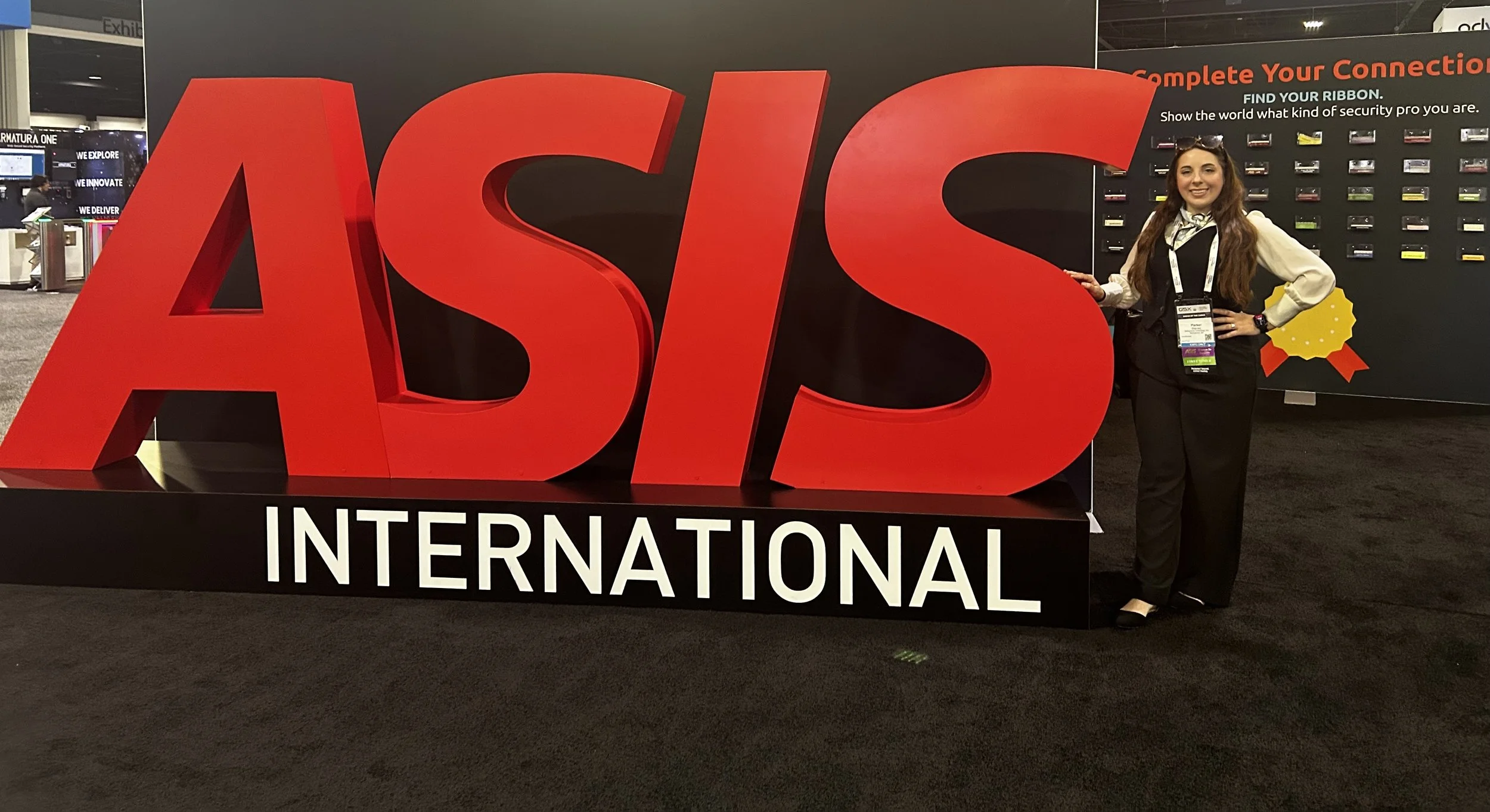
As a mentor and the team’s Marketing Operations Lead, it was especially rewarding for me to watch my peers experience so many firsts throughout the conference. Seeing them engage with professionals, participate in conference activities, ask questions, and gain a better understanding of the security industry was a proud moment. These experiences are an important part of professional development, and I am grateful that I was able to witness and support their growth firsthand. 

The experience was also personally meaningful for me, as GSX was my first security industry conference. While I was able to experience many of these firsts alongside our team, I also gained a deeper understanding of the industry, expanded my own professional network, and learned more about the role we play as a firm within the security profession. 

Overall, I am incredibly proud of our team and everything we accomplished during this year’s GSX Conference. I am especially excited to continue witnessing the growth and development of our employees, our marketing team, and Safeguards Consulting as a whole. I look forward to seeing how the experiences and connections we gained this week continue to shape our team and contribute to our firm’s continued growth." 

More Than Attendees: Serving GSX and Our Team Through Mentorship and Volunteerism 

We were also proud to be active participants in this year’s conference. Several members of our team served as volunteers directing traffic flow within the building and assisting with registration and questions. Overall, our team served in numerous mentorship and volunteer roles throughout this year's conference; both internally and externally. 
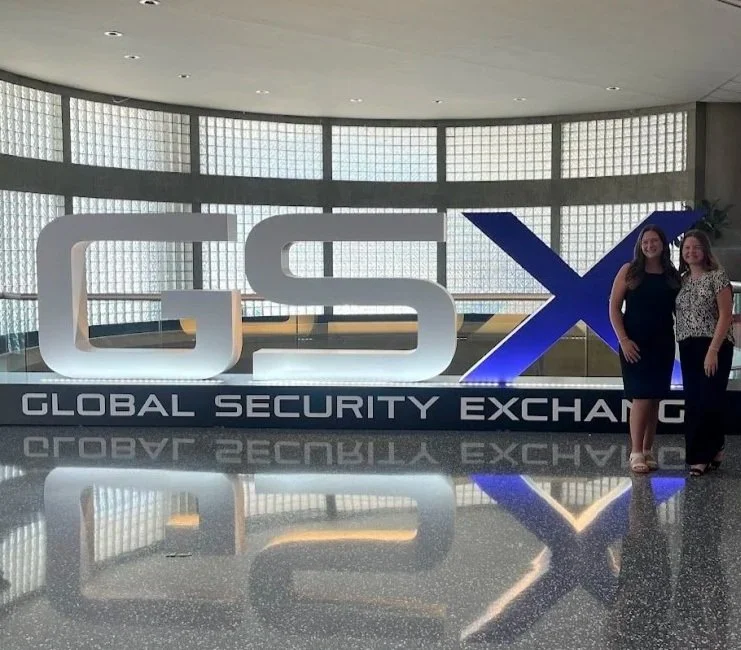
Signing Off with a Sweet Finish in the Peach State 

For Safeguards Consulting, GSX 2026 was about more than attending another industry conference. It was an opportunity to learn, build relationships, explore new technologies, contribute to the broader security community, and provide our team with experiences that will continue to shape their professional development. 

For our first-time attendees, the conference offered an introduction to an industry that many are just beginning to explore. For our more experienced team members, it provided another opportunity to strengthen existing relationships, expand their knowledge, and share their experience with the next generation of professionals. 

As we reflect on this year’s conference, we are proud of the role our team played at GSX and grateful for the opportunity to experience it together. From the exhibit hall and educational sessions to networking opportunities, volunteer roles, and time spent together as a team, each experience contributed to a memorable week in Atlanta. 

We are excited to carry the connections, knowledge, and experiences from GSX 2026 forward as we continue serving our clients, supporting our industry, and investing in the growth of our team. 

From Peaches to Oranges: We Look Forward to Seeing You in Orlando, FL, in 2027   

As we trade the peach state, Georgia, for the orange state, Florida, we look forward to continuing our GSX experience in Orlando, Florida next year!  

To learn more about the GSX Conference, visit: 

gsx.org

To learn more about our involvement with ASIS and GSX, visit our GSX webpage: 
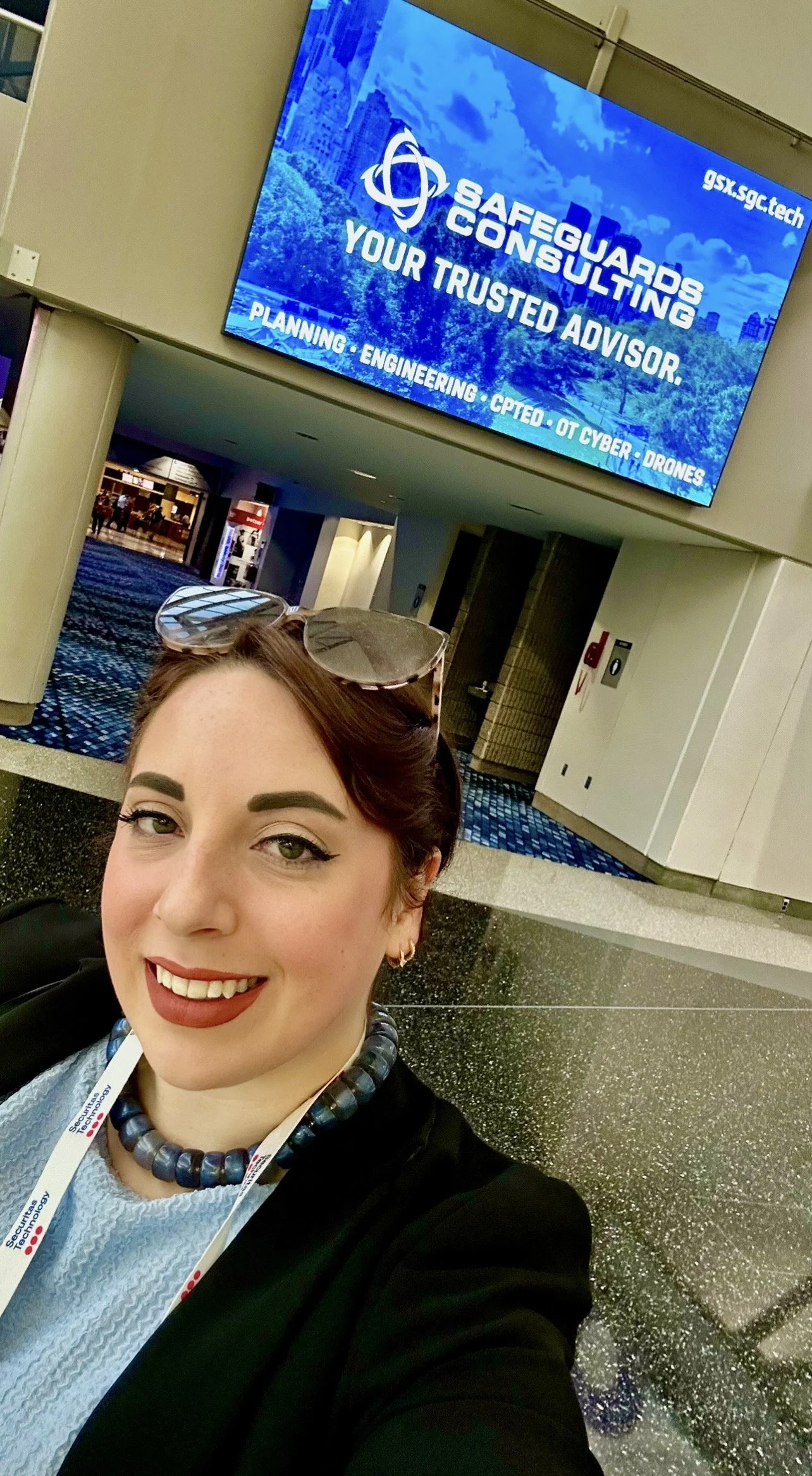
gsx.sgc.tech

Beyond Consultants at GSX: Why Marketing and Other Departments Should Be There

Meet Your Trusted Advisor's Trusted Marketer  

Over the past 4½ years, I, Parker Stalvey, have proudly served on the marketing team at Safeguards Consulting, Inc. I began my career with the firm as a Marketing Intern, progressed into a part-time Marketing Operations Specialist role, and now serve as the full-time Marketing Operations Lead. 

Throughout those years, I have gradually stepped into the waves of security knowledge and expertise through my role. I have developed a general understanding of many of the concepts our firm works with, particularly in areas such as access control and Crime Prevention Through Environmental Design (CPTED). I have written about our services, researched industry topics, supported our involvement with professional associations, and helped communicate the work our consultants perform for our clients. 

However, there was still a gap in my understanding...  

I do not believe I ever fully understood the complete circle of the products and technologies our consultants evaluate and advise clients on, nor did I fully understand the business development side of the security consulting industry. 

That changed considerably when I attended my first Global Security Exchange (GSX) Conference in Atlanta, Georgia. 

Before GSX: Understanding Security from a Marketing Perspective 

Before GSX, the only professional conferences I had personally attended were the American Marketing Association (AMA) Southeastern Collegiate Conference and the Society of Marketing Professional Services (SMPS) Southeastern Conference. 

Both experiences were valuable in their own ways, but neither provided the same exposure to the security industry that I experienced at GSX. One was focused solely on marketing, and the other on architecture, engineering, and construction industry (A/E/C) marketing.  

That said, I had attended several security networking events during my time with Safeguards Consulting, so I was not completely unfamiliar with the professional community surrounding our industry. From a marketing perspective, I have also spent years consistently writing about our firm's role in the security industry and the various professional associations, manufacturers, vendors, connections, and organizations with which we interact. 

However, much of my knowledge about our vendors and their products had previously been limited to individual research and specific product tasks. It never gave me a chance to fully explore or to see the products function in person.  

If I needed to write about a particular company, technology, association, or industry topic, I would research it, gather the information I needed, and incorporate that knowledge into whatever marketing initiative I was working on. Which is useful knowledge, but it is different from experiencing the industry and its representatives firsthand.

How GSX Sold Me as a Marketing Employee  

When I attended GSX, I finally had the opportunity to bring many of those individual pieces of information together: all the product research, company tagging on social media, the memorization of names and company roles from our customer relationship management (CRM) system, etc.  

Instead of researching a manufacturer from behind my computer, I could walk into the exhibit hall and meet representatives from the company. 

Instead of reading about security technology, I could see it demonstrated. 

Instead of writing about industry professionals and organizations, I could meet and speak with them. 

Instead of hearing about the products our consultants encounter, I could see the larger ecosystem of technologies and solutions surrounding our industry. 

For the first time, I could begin connecting the dots between what I had been learning through my marketing role and how those products, companies, technologies, and relationships fit together within the broader security consulting environment. 

That perspective was incredibly valuable and sold me on my attendance as a marketer was worth the investment for both me and our firm. 

You Cannot Promote Yourself or Your Firm to the Industry Without First Understanding It  

I am not a security consultant. My role is in marketing, and much of my day-to-day work centers around content, communications, branding, strategy, and supporting our firm's overall marketing efforts. 

So, why should someone in my position attend a security conference, and why should anyone outside of consulting and sales attend? 

After my first GSX experience, I believe the answer is simple: because effective marketing of yourself and your firm requires understanding the industry you are marketing to. 

It can be easy for marketing employees to become removed from the technical or professional services their organizations provide. We spend our time thinking about messaging, campaigns, social media, websites, content, and engagement. Meanwhile, our consultants are focused on serving clients and applying their expertise within the security industry. 

GSX helped bring those two perspectives closer together.

Walking through the exhibit hall, attending sessions, speaking with industry professionals, and seeing security technologies firsthand gave me a much better understanding of the environment in which our firm operates. 

I was able to see the products, technologies, and solutions that our consultants encounter in their work. I also gained a better understanding of the terminology used throughout the industry and the conversations taking place among security professionals. Much of this was due to our consultants, who happen to be industry experts and leaders, explaining each booth and our relationship to the company and asking for product demonstrations. Outside of gaining direct knowledge and access to asking them first-hand questions about the products, this interaction with our consultants also promoted bonding across our team branches.  

While each department has its own area of focus and expertise, we ultimately function as one organization. I often think of a firm much like the human body: it is made up of many different parts, each with its own distinct role, but every part must work together and communicate effectively to sustain the health and growth of the whole. In the same way, every branch of a firm must understand how its work connects with and supports the work of others. When those areas operate in alignment, the organization is better positioned to grow, adapt, and fulfill its mission. You will quickly find that I have quite an adoration for metaphors. 

As a marketer, I am responsible for helping communicate who we are, what we do, and why our work matters. To do that effectively, I need to understand the industry we serve and the work our firm performs. The more I learn about the security industry, the better equipped I am to communicate our services accurately, meaningfully, and authentically. That knowledge also allows me to better guide our marketing team and ensure that our efforts remain aligned with the company's broader objectives, goals, and mission(s). 

You Do Not Have to Be a Consultant to Learn From a Security Conference 

One of my biggest takeaways from GSX was that you do not have to be a consultant to benefit from attending a security conference. Most of our marketing team attended the conference, and each person I followed up with stated they felt more equipped and knowledgeable after leaving the conference. Our interns that attended also agreed that they gained more experience in one day at the conference than they had ever experienced inside a typical classroom setting. Our operations intern also agreed.  

In fact, bringing employees from different areas of a company can create a more well-rounded conference experience. 

Our team included marketing employees, operations employees, interns, and consultants (overall security, physical, and cyber). While each group approached the conference differently, everyone had something to learn. 

Our consultants could focus heavily on technical solutions and professional education. Our marketing team could pay attention to industry trends, messaging, technology, content opportunities, and relationship-building. Our younger employees could experience professional networking and an industry conference for the first time. 

We were all attending the same conference, but we were not experiencing it in exactly the same way. 

Experiencing the Technology First-Hand Changes the Way That You Market It 

One of the most valuable parts of GSX for me was walking through the exhibit hall. 

Before attending, I could read about security technology, look at a product website, or hear a consultant explain a solution. However, there is something different about seeing those technologies demonstrated in person and speaking directly with the companies developing them. 

Exploring the exhibit hall helped me create and inspire content that is more informed. As marketers, it gives us better questions to ask our consultants. It helps us recognize potential topics for future content. It also allows us to better understand what our audience may actually care about. 

Additionally, it helped me to better understand how other companies in the industry were promoting themselves and their services/products. Marketing security is very different than how you would market soda, clothes, or nail appointments.  

Simply put, industry exposure gives marketing context that cannot always be gained from behind a screen. 

Developing My Understanding of the Business Development Side  

Another area where GSX expanded my perspective was business development. 

As someone who works in marketing, I have always understood that relationships and visibility play an important role in supporting a firm's growth. However, GSX gave me a much clearer view of how those relationships develop within the security industry. 

The exhibit hall was not simply a collection of booths and salespeople. 

It was a place where manufacturers, security professionals, consultants, integrators, and other industry representatives were building relationships and having conversations about their work. 

Watching those interactions helped me better understand the relationship between marketing, networking, business development, and technical expertise. 

Marketing does not operate independently from the rest of the business. 

The more I understand how our consultants build relationships, how our firm interacts with vendors and industry organizations, and how security professionals identify challenges and solutions, the better I can understand how marketing supports those efforts and why it is vital we invest in those interactions.

Promoting Professional Development  

Another important lesson from GSX was that professional development is not limited to formal training. 

For me, some of the most valuable learning happened through conversations. 

I spoke with professionals I had never met before, learned about different organizations, listened to conversations about the security industry, and gained a better understanding of the professional community surrounding the work we do. 

For younger employees and those early in their careers, these experiences can be especially meaningful. Our firm experienced this firsthand as we took half a dozen first-time attendees to GSX this year.  

Attending a conference teaches you how to introduce yourself, start conversations, ask questions, navigate professional environments, and build relationships. Those are skills that extend far beyond a single conference or industry. 

Give New Perspectives an Opportunity to Participate  

I also believe there is value in having marketing employees and other employees that are non-consultants at a security conference because we naturally look at the experience through a different lens. 

While a consultant may immediately recognize the technical significance of a product or solution, a marketer may be thinking about how that technology should be explained to an audience that does not have the same technical background. 

We may notice a messaging opportunity, a content idea, a potential partnership, a social media opportunity, or a question that a prospective client might have. As an example, I created 3 blog ideas simply from attending a quick and free industry session in the exhibition hall - this blog post being one of those ideas. 

Hear My Sales Pitch: Consider the Investment  

Every organization must make its own decisions about how to allocate conference opportunities and resources, and these can be very difficult and awkward decisions. However, after my first GSX experience, I believe there is value in considering employees beyond the traditional conference attendee - executives, consultants, and salespeople. 

Marketing employees, operations employees, administrative professionals, interns, and other non-consultant team members can gain something different from the experience:  

  • They can develop industry knowledge. 

  • They can build professional connections. 

  • They can better understand the work their colleagues perform. 

  • They can identify even more opportunities that support the organization as a whole. 

Yesterday, I returned to work not only with photos, new connections, and content ideas, but also with a better understanding of the industry that Safeguards Consulting serves and a spark of inspiration (with plenty of emails to catch up on as well). As a side note, the content that our marketing team developed during the conference made the investment worth it alone. 

A Conclusion on Marketing Security  

Over the past 4½ years, I have grown tremendously, both personally and professionally. However, I also recognize that professional growth does not happen in isolation. If an organization wants its employees to become valuable contributors, it must be willing to invest in them as well. 

At Safeguards Consulting, that investment has taken many forms. One of the most significant has been the willingness of our President and Principal Consultant, Mark Schreiber, to share his industry knowledge with me and with the rest of our non-consultant team. His mentorship has helped prepare us for important industry discussions, professional interactions, and the marketing campaigns and decisions we make on behalf of the firm. 

Our consultants also play an important role in developing employees outside of the consulting side of the business. They do not simply consult with our clients; they also serve as mentors to the rest of our team. They have helped create a trusted and supportive working environment where employees feel comfortable asking questions, seeking clarification, and learning more about the industry and how their individual roles contribute to the firm's larger mission. We take our role as trusted advisor very seriously, both externally and internally.  

That said, as mentioned earlier, mentorship has been incredibly important to my own development. 

Without the willingness of our consultants to share their knowledge, many of us on the marketing and non-consultant side of the firm would have a much more limited understanding of what Safeguards Consulting actually does and how our work connects to the broader security industry. Thus, leading to a struggle in our roles.  

However, there is still a difference between learning about an industry and experiencing it firsthand. 

That is where opportunities such as GSX can make a meaningful difference. 

As marketers and other non-consultant employees, we can sometimes experience a knowledge gap when we enter highly specialized industry discussions or participate in initiatives centered around technical expertise. Even with strong internal mentorship, there are simply some things that are difficult to fully understand without being immersed in the environment where those conversations are taking place. 

Being surrounded by security professionals, manufacturers, integrators, consultants, and other industry representatives allowed me and my other non-consultant team members to see the conversations we support from a different perspective.  

It gave me an opportunity to take the knowledge I had gained through years of mentorship, research, and marketing work and connect it to the larger security industry in a tangible way. 

For me, that combination of mentorship inside the firm and firsthand industry exposure outside of it is what made GSX such a valuable professional development experience. 

Promote the Attendance of Your Marketers and Other Non-Consultant Team Members  

So, when your next conference opportunity arises, I hope you will consider promoting your marketing team and other employees when it comes to discussing the attendance of your team. 

To read more about our team’s experience at GSX, visit:

From Peaches to Promising Opportunities: Safeguards Consulting Wraps-Up GSX 2026

Sincerely,  

The Trusted Marketer for Your Trusted Advisor, Parker Stalvey, 

Marketing Operations Lead at Safeguards Consulting, Inc. 

From Peaches to Promising Opportunities: Safeguards Consulting Wraps-Up GSX 2026

Safeguards Consulting is excited to share a look back at our time spent at the Global Security Exchange (GSX) this week with our friends and industry partners at ASIS International. From educational sessions and networking opportunities to technology demonstrations, sponsorships, team-building activities, and professional development, this year's conference provided our team with an incredible opportunity to connect with the security industry while continuing to invest in the growth of our people and our firm. 

Throughout the conference, our team experienced numerous exciting activities and milestones, making this year's GSX an especially memorable event for the firm. 

Our MilestonesMaking Our Mark in the Peach State 

This year's GSX was particularly meaningful for our firm because it represented several important milestones. 

First, it marked the largest number of Safeguards Consulting representatives we have had attend a conference. Bringing such a diverse group of consultants, marketing professionals, operations staff, and interns together under one roof created an opportunity for our team members to experience GSX from different perspectives while learning from one another. 

This year's conference also represented our largest event sponsorship commitment to date. Safeguards Consulting was proud to support two important GSX-related events: 

  • GSX 2026 

  • The Southeastern ASIS Meet and Greet 

Our involvement in these events allowed us to further demonstrate our commitment to the security industry, strengthen relationships with fellow professionals, and create additional opportunities for our team to engage with members of the ASIS community. 

Our team also hosted the Chief Executive Network's Chief Security Officer Peer Network Q3 meeting during the conference.  

Schreiber Leads the Way in Georgia with His Sessions 

Education has always been an important part of our industry's continued growth, and Safeguards Consulting was proud to have our President and Principal Consultant, Mark Schreiber, contribute to this year's GSX educational program. 

Schreiber led two educational sessions during the conference week, including both a pre-conference session and a conference session. Each session addressed different aspects of security operations and design while providing attendees with practical information and concepts they could take back to their own organizations. 

🎤 Schreiber's pre-conference session, Facility Security Design: A Strategic Approach,” was held on Saturday, September 12, and Sunday, September 13. 

The session presented a detailed and systematic approach to designing a fully integrated physical security program. The course was developed with mid- to advanced-level security professionals in mind while also providing valuable information for practitioners and personnel directly involved in the design, specification, implementation, operation, and maintenance of security systems. 

By addressing security design from a comprehensive perspective, the session provided attendees with an opportunity to consider how individual security components can work together as part of a larger, integrated security strategy. 

🎤 Schreiber's second session, What Will Security Operations Centers (SOC) of the Future Look Like,” was held on Tuesday, September 15. 

The session explored multiple innovations and emerging megatrends and examined their potential impact on the future of Security Operations Centers. Topics included operational improvements, advancements to traditional security technologies, process automation and workflows, artificial intelligence, robotics and drones, and advanced user interfaces. 

Together, these sessions reflected the importance of continuing to examine how technology, design, operations, and emerging innovations are shaping the future of the security industry. 

Investing in Today's Youth → Cultivating Tomorrow’s Security and Marketing Leaders 

One of the most rewarding aspects of this year's GSX experience was the opportunity to bring several of our newer team members and interns to the conference. 

Many of these team members are currently in college or have recently graduated and are beginning their careers in the security industry through their roles with Safeguards Consulting. For the majority of the group, GSX represented their first professional conference, first major networking event, and first significant security-industry event. 

For us, this made their experience at GSX more than simply attending a conference. It was an opportunity to introduce the next generation of professionals to the industry, expose them to new technologies and ideas, and demonstrate the many career opportunities available within the security field. 

A Week of Company and Personal Growth  

This year's GSX conference provided our team with countless opportunities for both professional and personal growth. 

Throughout the week, Safeguards Consulting participated in sponsorship opportunities, supported industry events, provided educational opportunities for our team, strengthened existing relationships, established new connections, explored emerging technologies, and continued investing in business development. 

At the same time, we were able to provide our team members, particularly our interns and newer professionals, with experience that extended far beyond the traditional workplace. 

For some, GSX was their first conference. 

For others, it was their first opportunity to network with professionals outside of their immediate organization. 

For our consultants, it was an opportunity to reconnect with industry colleagues, share expertise, learn about emerging technologies, and continue contributing to conversations shaping the future of security. 

Lastly, for our marketing team, the conference provided an opportunity to develop what has become one of our largest conference-related marketing campaigns while capturing the people, experiences, and connections that made the week meaningful. 

Ultimately, GSX served as a reminder that professional growth happens in many different ways. It happens through conversations with industry peers and through attending sessions, exploring a new technology or asking a question at an exhibit booth, or when a student attends their first networking event and begins building professional development skills that set the foundation of their careers.  

Looking Ahead from the Peach State 

As we look toward the future, it looks a bit like Georgia - bright, welcoming, and full of promise. 

Our time at GSX reinforced the importance of continuing to invest in our people, our industry relationships, our professional development, and the future of security. 

We are grateful to ASIS International and everyone who helped make this year's Global Security Exchange such a meaningful experience for our team. We are equally grateful for the opportunity to participate alongside our industry partners, reconnect with familiar faces, meet new professionals, and introduce our newest team members to the security community. 

As we return from Atlanta and look ahead to what comes next, we are carrying out the new knowledge, conversations, connections, and experiences from GSX with us. 

For Safeguards Consulting, the conference was more than a week in Atlanta. It was an investment in our people, our partnerships, our industry, and the future. 

To learn more about our involvement at GSX, visit:

https://www.safeguardsconsulting.com/gsx

Cloud vs. On-Premises Video Surveillance: Which Security Architecture Is Right for Your Organization?

As organizations modernize their physical security infrastructure, one of the most important decisions they face is whether to deploy a cloud-based video surveillance system or maintain an on-premises solution. While both approaches can provide effective security monitoring, the choice ultimately impacts cost, scalability, cybersecurity, operational efficiency, and long-term flexibility. 

For security leaders, facility managers, and IT departments, understanding each architecture's strengths and limitations is essential before investing in a new video surveillance platform. 

Understanding the Difference 

At its core, the distinction comes down to where video data is stored and managed. 

On-premises video surveillance stores footage locally using Network Video Recorders (NVRs), servers, or dedicated storage infrastructure located within the organization’s facility. The organization owns and maintains the hardware, software, and storage environment. 

Cloud-based video surveillance, often called Video Surveillance as a Service (VSaaS), stores video on remote servers managed by a cloud provider. Users access live and recorded video through a web browser or mobile application from virtually any location with internet access. 

Today, many organizations are also exploring hybrid architectures that combine local recording with cloud management and analytics, allowing them to leverage advantages from both approaches.  

Benefits of Cloud Video Surveillance 

1. Remote Access and Centralized Management 
One of the most significant advantages of cloud surveillance is the ability to manage multiple facilities from a single interface. Security personnel can view live feeds, investigate incidents, and administer users without being physically present at the site. This capability is especially valuable for organizations with multiple offices, campuses, retail locations, or critical infrastructure sites. 

For growing enterprises, centralized visibility can dramatically improve operational efficiency and incident response times.  

2. Scalability 
Expanding an on-premises system often requires purchasing additional servers, storage arrays, licenses, and supporting infrastructure. Cloud solutions allow organizations to add cameras and storage capacity as needed with significantly less upfront investment.  

This flexibility makes cloud deployments particularly attractive for organizations expecting growth or managing frequently changing facility footprints. 

3. Reduced IT Management Burden 
Cloud providers typically handle software updates, patch management, backups, and infrastructure maintenance. As a result, organizations often require fewer internal resources to manage their surveillance environment.  

For organizations with limited IT staffing, this operational simplicity can be a compelling benefit.  

4. Improved Disaster Recovery 
Because footage is stored off-site, video evidence remains available even if a facility experiences fire, flooding, theft, vandalism, or other events that damage local equipment. This resilience is one of the strongest arguments in favor of cloud-based storage.  

Many providers also distribute data across geographically redundant data centers to further enhance availability and recovery capabilities.  

5. Faster Adoption of Advanced Technologies 
Cloud platforms are often quicker to deploy emerging technologies such as AI-powered analytics, object classification, facial recognition, forensic search, and automated alerts. Organizations utilizing cloud-enabled physical security systems are generally adopting AI capabilities at higher rates than those relying solely on traditional on-premises infrastructure.  

Challenges of Cloud Video Surveillance 

1. Recurring Subscription Costs 
While cloud systems typically reduce initial capital expenditures, they introduce recurring operational expenses through monthly or annual subscription fees. Over time, these fees can exceed the cost of an equivalent on-premises deployment depending on retention requirements and camera count.  

Organizations should evaluate total cost of ownership over a five- to ten-year period rather than focusing exclusively on upfront costs.  

2. Internet Demand and Dependency 
Cloud surveillance depends on reliable network connectivity and sufficient upload bandwidth, which can be significant for larger facilities. High-resolution video streams can consume significant network resources, particularly in large deployments. Network outages may also affect remote viewing capabilities and cloud recording performance.  

Although many modern systems provide edge recording capabilities, network performance remains an important design consideration.  

3. Data Sovereignty and Compliance Concerns 
Certain industries, including healthcare, government, defense, and critical infrastructure, may have strict requirements regarding where surveillance data is stored and who can access it. Some organizations may be uncomfortable storing sensitive security footage in third-party environments, even when encryption and strict access controls are in place.  

Benefits of On-Premises Video Surveillance 

1. Complete Data Control 
On-premises systems provide organizations with direct ownership and control over video storage, retention policies, system configuration, and cybersecurity controls. This level of control is often preferred by organizations handling highly sensitive information or operating under strict regulatory frameworks.  

For government facilities, data centers, and critical infrastructure environments, retaining custody of video data may be a key requirement.  

2. Lower Long-Term Service Costs 
Although on-premises deployments require larger upfront investments, they often involve fewer recurring costs after installation. Organizations that already maintain IT infrastructure may find long-term ownership more cost-effective than paying continuous subscription fees.  

This model can be particularly attractive for large campuses with hundreds or thousands of cameras.  

3. Independence from Internet Connectivity 
Since video processing and storage occur locally, on-premises systems continue recording even during internet outages. Access to recorded footage remains available within the local network regardless of external connectivity conditions.  

For mission-critical environments, this reliability can be a significant advantage.  

4. High Performance for Large Video Workloads 
Organizations managing large numbers of high-resolution cameras may benefit from keeping video traffic within their local network. This approach reduces bandwidth demands and can simplify large-scale video retention requirements.  

Challenges of On-Premises Video Surveillance 

1. Higher Upfront Capital Expense 
Servers, storage, licensing, networking hardware, and redundant backup systems can represent a significant initial investment. Many organizations must also budget for future hardware refresh cycles every several years. 

2. Maintenance Responsibilities 
With on-premises systems, the organization is responsible for system updates, cybersecurity patching, hardware replacements, backups, and performance monitoring. These tasks often require dedicated IT resources or integrator support agreements. 

3. Physical Vulnerability 
If local servers are damaged, stolen, or destroyed, video evidence may be lost unless appropriate redundancy and off-site backup systems are implemented. This reality remains one of the most significant limitations of a purely on-premises architecture.  

Is Hybrid the Best of Both Worlds?

Increasingly, organizations are adopting hybrid architectures that combine local recording with cloud-based management, analytics, and redundancy. Industry research indicates that many security professionals view hybrid deployments as the most practical long-term strategy because they balance flexibility, resilience, compliance, and operational efficiency.  

A hybrid model can provide: 

  • Local recording during network outages 

  • Off-site backup of critical footage 

  • Centralized management across multiple locations 

  • Easier adoption of AI-powered analytics 

  • Greater flexibility for future expansion 

These advantages explain why many consultants and security leaders increasingly recommend hybrid solutions when modernizing enterprise video surveillance environments.  

Final Thoughts 

There is no universal "best" solution when comparing cloud and on-premises video surveillance.

Cloud surveillance offers scalability, remote accessibility, reduced maintenance, and rapid access to advanced technologies. On-premises systems provide maximum control, lower dependency on internet connectivity, and may deliver better economics for large-scale deployments. 

The right choice depends on an organization's security objectives, regulatory requirements, IT resources, risk tolerance, and growth plans. For many enterprises today, the discussion is no longer cloud or on premises. Instead, it is how to strategically combine both approaches to create a resilient, scalable, and future-ready security ecosystem. 

Choosing between cloud, on-premises, and hybrid video surveillance solutions can be complex. Safeguards Consulting helps you evaluate your security needs, compare technology options, and develop a surveillance strategy that aligns with your operational requirements, compliance obligations, and long-term goals. 

As an independent consulting firm, our recommendations are based on what is best for your organization, helping you make informed decisions and maximize the value of your security investment. Contact us to discuss your video surveillance project and future security objectives. 

https://www.safeguardsconsulting.com/contact-us?utm_source=SGC Blog&utm_medium=OrganicWebPage&utm_campaign=2026_SGC-SGCBlogCloudvsOnPremVideoSurveillance_SGCBlogCloudvsOnPremVideoSurveillance_SGCContactPage&utm_term=SGC%23Contact%23Page&utm_content=SGCBlogCloudvsOnPremVideoSurveillance  

Sources:  

Andersson, C. (2026, April 22). Cloud video surveillance explained: Incl. benefits and limitations. Axis Communications. https://newsroom.axis.com/en-us/blog/cloud-video-surveillance 

Benefits of Cloud-Based Video Surveillance Systems. (2026, July 16). JETT. https://jettbt.com/news/benefits-of-cloud-based-video-surveillance-systems/ 

Bohot, H. (2026, June 13). Cloud-based surveillance vs on-premise CCTV systems: Pros, cons, and use cases. INNXEON. https://innxeon.com/cloud-based-surveillance-vs-on-premise-cctv-systems/ 

Chatterjee, F. (2026, April 20). Cloud vs On-Premise Video Surveillance Guide. Visylix. https://visylix.com/blog/cloud-vs-on-premise-video-surveillance 

Cloud vs. OnPremise Video Surveillance Systems: What You Should Know. (2026, August 7). Ivis. https://ivis.net/cloud-vs-on-premise-video-surveillance-systems-what-you-should-know/ 

Cloud, on-perm, or hybrid: choosing the right VMS approach. (n.d.). https://www.axis.com/dam/public/ff/bb/86/axis_vms_whitepaper_r3pdf-en-US-450107.pdf 

Cloud-Based Video Surveillance vs. On-Premise Video Surveillance: Making the Right Choice. (2024, July 24). Master Technology Group | MTG. https://www.callmtg.com/cloud-based-video-surveillance-vs-on-premise-video-surveillance-making-the-right-choice/ 

Goode, E. (2024, December 9). Genetec report shows boost in hybrid cloud use and IT’s strategic influence. Security Journal Americas. https://securityjournalamericas.com/genetec-report-hybrid-cloud-security/ 

Maloney, P. (2026, July 6). What is a cloud-based CCTV system? Benefits, costs, and use cases. Lumana | Enterprise AI Video Security & Intelligence. https://www.lumana.ai/blog/what-is-a-cloud-based-cctv-system-benefits-costs-and-use-cases 

Surveillance in the Cloud: Advantages and Considerations. (2024, September 24). Hanwha Vision. https://www.hanwhavision.com/us/news-events/article/surveillance-in-the-cloud-advantages-and-considerations-for-remote-monitoring 

Why the future of cloud is more flexible than you think. (n.d.). Genetec Inc. https://www.genetec.com/blog/industry/why-the-future-of-cloud-is-hybrid 

Release of the August 2026 Safeguards Consulting Chronicle

Our team is proud to share that we recently released the August issue of our firm's monthly newsletter, The Safeguards Consulting Chronicle, and we would love to invite you to subscribe for free.  

Our newsletter covers numerous industry events, news, and updates.  

Some of the items we included in our August issue were:     

+ A “Featured Friend” spotlight piece on our friend and former client, Clemson University.  

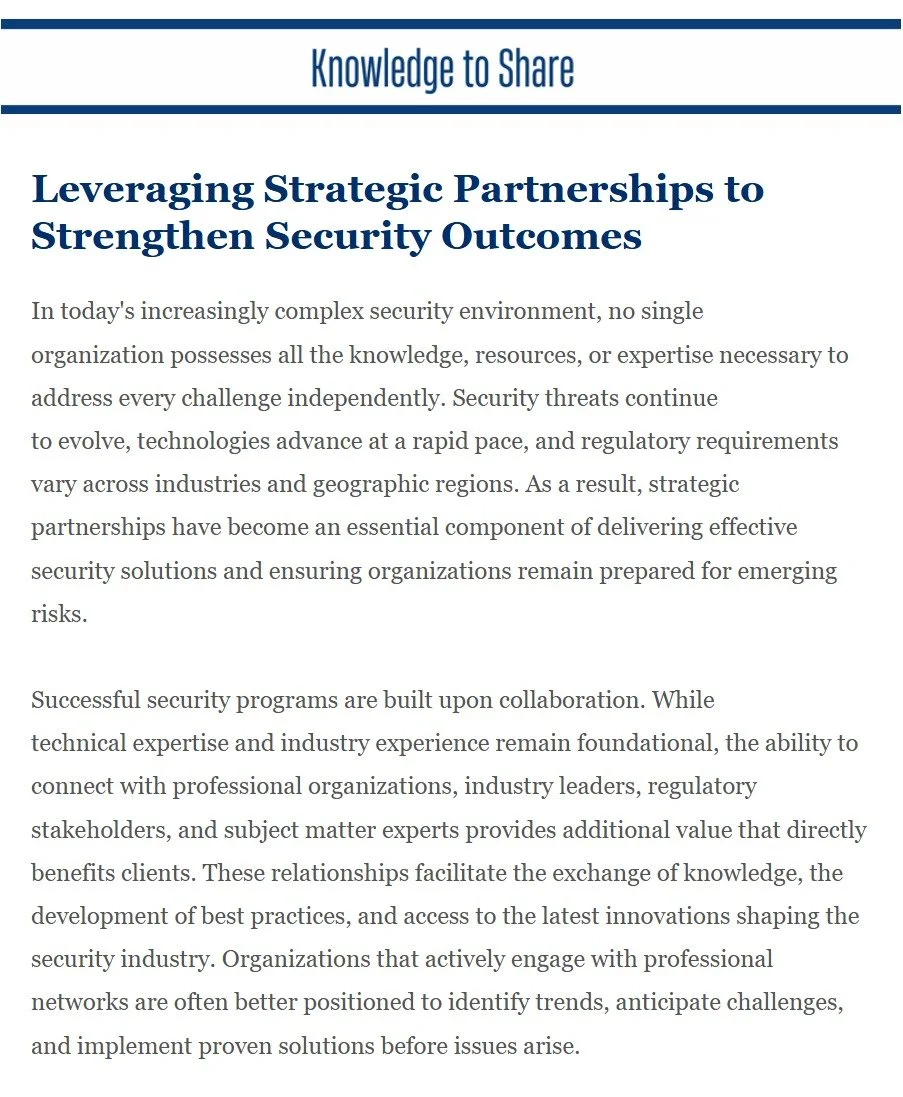
+ An exclusive article written by a member of our Operations team, “Leveraging Strategic Partnerships to Strengthen Security Outcomes."   

+ A list of beneficial industry events, which includes events we are supporting/speaking at, as well as other events we recommend attending.     

+ Our list of useful blog articles.      

+ A selection of key industry news and updates.      

+ A quick industry tip provided by our experts.     

This month’s “Featured Friend” will also be our industry partner, the Security Industry Association (SIA)! 

If interested, please subscribe using the hyperlink included below.     

https://www.safeguardsconsulting.com/newslettersignup?utm_source=SGC Blog&utm_medium=OrganicWebPage&utm_campaign=2026-09-01_SGC-C_SGCBlog_OrganicWebPage_SGCNewsletterInvite_SGCNewsletterSubscriptionPage&utm_term=SGC%22Newsletter%22Subscription%22Page&utm_content=SGC%22Newsletter%22Invite  

When you subscribe to our newsletter, you gain access to all the exclusive security content mentioned above, as well as our newsletter archive, so that you never miss an issue! We hope these resources will help you in your role as a security professional. It also allows us to keep you updated regarding company news, updates, or events. 

Release of the July 2026 Safeguards Consulting Chronicle

Our team is proud to share that we recently released the July issue of our firm's monthly newsletter, The Safeguards Consulting Chronicle, and we would love to invite you to subscribe for free.  

Our newsletter covers numerous industry events, news, and updates.  

Some of the items we included in our July issue were:     

+ A “Featured Friend” spotlight piece on our friend and former client, Pattern Energy, and the SunZia Wind and Transmission project.  

+ An exclusive article written by our Cybersecurity Team, “Safe Travels: Best Security Practices to Pack for Every Trip."   

+ A list of beneficial industry events, which includes events we are supporting/speaking at, as well as other events we recommend attending.     

+ Our list of useful blog articles.      

+ A selection of key industry news and updates.      

+ A quick industry tip provided by our experts.     

This month’s “Featured Friend” will also be Clemson University! 

If interested, please subscribe using the hyperlink included below.     

Newsletter Signup — Safeguards Consulting, Inc. 

When you subscribe to our newsletter, you gain access to all the exclusive security content mentioned above, as well as our newsletter archive, so that you never miss an issue! We hope these resources will help you in your role as a security professional. It also allows us to keep you updated regarding company news, updates, or events. 

How Assumptions Are Shaping Today's Security Leadership

Safeguards Consulting is happy to highlight the numerous peer-to-peer networking, leadership, and professional development opportunities that are available through our industry partners, the Chief Executive Network (CEN) and the Chief Security Officer (CSO) Peer Network.  

Leadership Involvement 

In January 2026, our President and Principal Consultant, Mark Schreiber, was appointed Chair of the Chief Security Officer (CSO) Peer Network, a leadership role of distinction within the Chief Executive Group and its substantial executive network. In this role, Schreiber works with senior security leaders across a wide range of industries to engage in meaningful dialogue about emerging risks, industry trends, strategic leadership, and best practices. 

One of The Greatest Challenges for Leaders In The Security Industry to Battle  

Security leaders, whether they are a Chief Security Officer (CSO), Director of Security, or in a similar leadership role, all have no shortage of responsibilities. They are expected to make informed decisions while balancing competing priorities, while balancing organizational strategy, and managing evolving risks.  

One of the greatest challenges leaders face is not always a lack of information, but the assumptions made about how to approach their roles. Recognizing these beliefs can create opportunities for growth, strengthen professional relationships, and informed decision-making.

The Top 5 Assumptions You May Be Making That Are Worth Reconsidering: 

Assumption #1: "Every Challenge is Mine Alone to Solve." 

Many security leaders hold the weight of responsibility within a variety of areas in their firm. They are tasked with maintaining the safety and security of the staff, facilities, and other company assets.  

Due to this weight, it can be easy to think that the organization's security challenges and shortcomings rest on the CSO. However, this is not always the case, and there are creative ways to manage these responsibilities that align with different corporate cultures.  

The benefit of thoughtful peer discussion can support creativity in management methodologies, and it is not limited to those related to your industry. It can be helpful to hear from other executives about creating a culture of compliance, considering a new approach or solution, and more.  

Assumption #2: "My Organization's Challenges Are Entirely Unique." 

It is true that each organization is distinct in its individual culture, goals, and obligations. Leadership challenges, however, can be more similar than you would expect.  

Security executives tend to face similar subjects related to communication efficacy, accuracy in strategic planning, and how to properly order organizational priorities. Not all questions will be answered the same, but having the opportunity to learn from peers in comparable situations can help bring a fresh perspective.  

Assumption #3: "Networking Is Primarily About Making New Connections." 

Networking is more than just meeting people. It is about developing trusted relationships that become ongoing resources. Peer groups provide collaboration, idea exchange, and long-term professional support. However, meaningful professional connections are seldom forged in a single conversation. Peer communities allow relationships to be sustained. Regular conversations build trust, foster collaboration, and create opportunities for continuous learning during the year. Executive peer networks are characterized by this ongoing engagement, where conversations go well beyond a single meeting or conference. 

Assumption #4: "The Best Learning Happens Through Formal Presentations." 

Educational sessions, keynote speakers, and webinars all provide valuable knowledge. They introduce new ideas, share research, and highlight emerging topics. At the same time, some of the most meaningful learning comes through conversation. 

Open discussions give leaders the opportunity to ask key questions. They allow participants to share their firsthand experiences candidly, and through these exchanges, leaders learn how their peers have approached similar situations. These exchanges often provide context that is unable to be captured in a presentation alone. 

Confidential peer discussions create an environment where individuals can speak openly, share lessons learned, and benefit from collective experience. 

Assumption #5: "My experience outweighs the need for greater learning." 

Experience is one of a security leader's greatest assets; however, it does not diminish the value of continued learning. As organizations evolve and new challenges emerge, even the most seasoned executives benefit from fresh perspectives as well as the opportunity to exchange ideas with trusted peers. Continuous learning is not a reflection of inexperience. Instead, it is essential for effective leadership and continuous professional growth. 

Looking Beyond Assumptions 

The best leaders keep learning long after they have gained experience. They seek new perspectives, examine their own strategies, and understand the importance of learning from others who have faced similar leadership choices. When leaders are part of trusted professional communities where they can share ideas openly and confidentially, everyone wins. Peer networks can help expand perspectives and build leadership skills by providing regular opportunities for discussions, collaborative learning, or shared experiences. 

Are You Interested in Learning More? 

If you would like to inquire about more information on the CSO Peer Network, please contact the Chair of the Chief Security Officer (CSO) Peer Network, and our Principal Consultant, Mark Schreiber at: 

https://www.safeguardsconsulting.com/contact-us

To learn more about each group, visit:    
Senior Executive Network (SEN): Senior Executive Network  
CSO Peer Group (CSO): CSO Peer Network | Senior Executive Network  

To learn more about our team’s involvement, visit:   

https://www.safeguardsconsulting.com/knowledge/2026/7/17/the-most-valuable-security-strategy-may-be-a-conversation-the-cso-peer-network

https://www.safeguardsconsulting.com/knowledge/2026/2/19/introducing-the-chief-executive-networks-exclusive-cso-group

The Most Valuable Security Strategy May Be a Conversation: The CSO Peer Network

Today’s Chief Security Officers are expected to do much more than protect people and assets. They must navigate evolving physical threats, integrate emerging technologies like artificial intelligence, manage enterprise risk, communicate with executive leadership, and make strategic decisions impacting the entire organization.   

It requires continuous learning and, perhaps most importantly, trusted conversations with peers who know the challenges firsthand.  

At Safeguards Consulting, we understand that the best security solutions come from experienced leaders sharing ideas, discussing real-world challenges, and learning from one another. This idea is also a foundational brick within our own firm’s foundation and culture.  

That is exactly what the Chief Security Officer (CSO) Peer Network was designed to accomplish. 


Leadership That Extends Beyond Our Organization 

In January 2026, Safeguards Consulting's President and Principal Consultant, Mark Schreiber, was appointed Chair of the Chief Security Officer (CSO) Peer Network

In this role, Schreiber works alongside senior security executives from organizations across numerous industries to facilitate meaningful discussions surrounding today's most pressing security challenges. These conversations focus on strategic leadership, organizational resilience, emerging technologies, risk management, executive communication, and the future of the security profession. 

The knowledge gained within the network benefits not just the individual members but also the organizations they serve, as found within the benefits listed below. 

Security Leadership Can Be Isolating 

Tough decisions often involve executive-level strategy, confidential information, investigation processes, changing threats, and the balancing of business needs with the safety of the organization. This has created a scenario where many security leaders are making important decisions without a trusted peer network to turn to, which is the ultimate benefit of the CSO Peer Network. Members of the network are part of a confidential community of experienced executives who share challenges, exchange ideas, and share lessons learned from decades of leadership.  

No matter if the discussion is about enterprise security strategy, crisis response, staffing issues, artificial intelligence, or emerging threats, members get great perspectives from fellow professionals who have been there. 

At the end of the day, it takes continued support and trusted guidance to allow your security plans and team to climb to the top of their efficiency. 

Confidential Conversations Drive Better Decisions 

One of the greatest strengths of the CSO Peer Network is its commitment to confidentiality. 

Through the group, members can speak freely about sensitive organizational issues, knowing that competitive information will not walk out the door. It is a trusted environment for honest conversations, constructive feedback, and practical problem-solving that cannot exist in common networking environments.  

Additionally, members also receive strategic insight from peers who understand the realities of executive security leadership, not generic advice. 


Carefully Curated Peer Groups 

Unlike many professional organizations, the CSO Peer Network deliberately creates executive circles of security leaders with similar responsibilities and organizational complexity. Their groups are carefully constructed to avoid direct competition, while ensuring members share similar challenges, leadership responsibilities, and strategic priorities. In turn, this keeps the conversations relevant and immediately applicable to each member's organization. The result is a network based on trust, collaboration, and actionable insight, not just networking for the sake of it.  


Discussing the Issues That Matter Most 

Every meeting is designed to provide practical takeaways that members can immediately apply within their organizations. 

Recent and upcoming discussions include topics such as: 

  • Communicating priorities to executive leadership 

  • The evolving physical threat landscape 

  • Measuring and communicating the return on security investments 

  • Balancing security with employee experiences 

  • Crisis management and organizational resilience 

  • Recruitment and retention of security professionals 

  • Standardizing security across multiple facilities 

  • Integrating artificial intelligence and emerging security technologies 

  • Preparing for future risks before they become today's problems 

These conversations provide more than ideas; they produce actionable strategies that strengthen security programs and improve organizational resilience.  

Investing in Your Leadership 

Professional development is often seen as an investment in an individual. However, the CSO Peer Network indicates that it is also an investment in the organization. Every insight gained, every best practice shared, and every lesson learned can improve security operations, strengthen executive decision-making, and better prepare organizations for the challenges ahead. 

Join Our Conversation 

If you are a Chief Security Officer, Director of Security, or senior security executive looking to expand your perspective and build meaningful relationships with your fellow leaders, we invite you to explore the Chief Security Officer Peer Network.  

Are You Interested in Learning More? 

If you would like to inquire about more information on the CSO Peer Network, please contact the Chair of the Chief Security Officer (CSO) Peer Network, and our Principal Consultant, Mark Schreiber at: 

Contact — Safeguards Consulting, Inc. 

To learn more about each group, visit:    

Chief Executive Network: CEO Peer Advisory Groups - Chief Executive Network 
Senior Executive Network (SEN): Senior Executive Network  
CSO Peer Group (CSO): CSO Peer Network | Senior Executive Network  

To learn more about our team’s involvement, visit:   

Introducing the Chief Executive Network’s Exclusive CSO Group — Safeguards Consulting, Inc. 

Release of the June 2026 Safeguards Consulting Chronicle

Our team is proud to share that we recently released the June issue of our firm's monthly newsletter, The Safeguards Consulting Chronicle, and we would love to invite you to subscribe for free.  

Our newsletter covers numerous industry events, news, and updates.  

Some of the items we included in our June issue were:       

+ A featured friend spotlight piece on our friend and former client, Pattern Energy! Our team of trusted advisors was honored to assist them with their SunZia Wind and Transmission project, which is the largest renewable energy infrastructure project in US history!   

+ An exclusive article written by The Safeguards Consulting, Inc. Cybersecurity Team.  

+ A list of beneficial industry events that include events we are supporting/speaking at, as well as other events we recommend attending.      

+ Our list of useful blog articles.       

+ A selection of key industry news and updates.       

+ A quick industry tip provided by our experts.    

If interested, please subscribe using the hyperlink included below.     

Newsletter Signup — Safeguards Consulting, Inc. 

When you subscribe to our newsletter, you gain access to all the exclusive security content mentioned above, as well as our newsletter archive, so that you never miss an issue! We hope these resources will help you in your role as a security professional. It also allows us to keep you updated regarding company news, updates, or events. 

The Top Peer-to-Peer Advantages of Chief Executive’s CSO Peer Network Group

Safeguards Consulting is proud to highlight the many peer-to-peer networking, leadership, and professional development advantages available through the Chief Executive Group (CEG), including the Chief Executive Network (CEN) and the Chief Security Officer (CSO) Peer Network

In January 2026, our President and Principal Consultant, Mark Schreiber, was appointed Chair of the Chief Security Officer (CSO) Peer Network, a distinguished leadership position within the Chief Executive Group and its expansive executive network. Through this role, Schreiber collaborates with senior security leaders from across a wide range of industries, fostering meaningful discussions on emerging risks, industry trends, strategic leadership, and best practices. 

This affiliation has created exciting opportunities for knowledge-sharing, professional growth, and access to valuable resources that benefit both CSO Peer Network members and the broader Chief Executive Network. By connecting executives with accomplished peers facing similar challenges, the network promotes collaborative problem-solving, strategic insight, and the exchange of innovative ideas that help organizations strengthen their leadership and security programs. 

How Is the Chief Executive Network (CEN) Structured? 

The Chief Executive Network (CEN) is an elite, high-commitment professional organization dedicated to enhancing executive performance and leadership effectiveness. It brings together leaders from diverse industries, cultures, and professional backgrounds to foster continuous learning, collaboration, and professional growth. 

The Chief Security Officer (CSO) Peer Network is a subgroup that operates under the broader Chief Executive Network (CEN), which serves as the central platform for executive engagement and peer collaboration. The Chief Executive Group (CEG) functions as the overarching organization, encompassing all affiliated networks and leadership communities. 

To learn more about the different groups, view our latest CEN blog:

https://www.safeguardsconsulting.com/knowledge/the-top-benefits-of-the-chief-executives-chief-security-officer-cso-group  

 Why Are Peer-to-Peer Advantages Crucial for Executives? 

Strategy can often be an isolating responsibility at the highest levels of leadership, particularly when executives are navigating highly specific or complex organizational challenges where conventional research tools or search-based solutions are insufficient. It is in this context that the Chief Executive Network provides meaningful value. 

Chief Security Directors are not required to operate in isolation or within the confines of internal perspectives alone. When decision-making is limited to internal data streams and organizational viewpoints, leaders risk missing external context, broader industry perspective, and objective peer validation. 

The purpose of peer-to-peer engagement within the Chief Executive Network is to reduce this isolation by connecting executives with a trusted circle of experienced peers. Through structured peer networks, leaders gain access to real-world insights that are often not available through traditional research or consulting channels. These perspectives come from individuals who are actively navigating similar challenges and operating within comparable environments. 

In addition to practical problem-solving, this model provides a deeper level of professional support, offering shared understanding, contextual perspective, and relational insight. By leveraging collective executive experience, leaders are better equipped to test assumptions, validate strategic direction, and refine high-stakes decisions in a more informed and balanced manner. 

Ultimately, peer collaboration enables executives to supplement internal analysis with external wisdom, strengthening both the quality and confidence of strategic decision-making in complex organizational environments. 

What Are the Top 10 Peer-to-Peer Advantages Offered by the CSO Peer Network? 

The Chief Security Officer (CSO) Group provides a structured peer-to-peer environment designed to strengthen executive decision-making, leadership effectiveness, and organizational resilience. The top advantages include: 

  1. Accelerated Collaborative Problem-Solving 
    Enables executives to rapidly address complex challenges through shared experience and collective insight. 

  2. Trusted, Non-Judgmental Environment 
    Provides a confidential and supportive setting where leaders can speak openly without concern for external evaluation. 

  3. Unbiased Feedback and Strategic Insight 
    Offers objective perspectives from peers outside of the executive’s organization, reducing internal bias. 

  4. Blind Spot Identification 
    Helps leaders recognize overlooked risks, assumptions, or gaps in strategy and execution. 

  5. Bottleneck Prevention and Resolution 
    Supports early identification and mitigation of operational or strategic constraints. 

  6. Reduction of Leadership Isolation 
    Connects senior executives with peers facing similar pressures, reducing the sense of decision-making isolation at the top. 

  7. Accountability Partnerships 
    Encourages follow-through on strategic initiatives through peer-driven accountability and shared expectations. 

  8. Cross-Industry and Cross-Cultural Exposure 
    Expands executive perspective through engagement with leaders across diverse industries and global contexts. 

  9. Just-in-Time Learning vs. Just-in-Case Knowledge 
    Provides timely, relevant insights tailored to immediate challenges rather than theoretical or generalized learning. 

  10. Empathy, Support, and Burnout Mitigation 
    Fosters emotional resilience and leadership sustainability through shared understanding and peer support. 

Collectively, these advantages create a high-value ecosystem where senior leaders can refine decision-making, validate strategy, and strengthen leadership performance through trusted peer engagement. 

Are You Interested in Learning More? 

If you would like to inquire about more information on the CSO Peer Network, please contact us at: 

Contact — Safeguards Consulting, Inc. 

To learn more about each group, visit:    
Chief Executive Group (CEG): Chief Executive Group  
Senior Executive Network (SEN): Senior Executive Network  
CSO Peer Group (CSO): CSO Peer Network | Senior Executive Network  

To learn more about our team’s involvement, visit:   

Introducing the Chief Executive Network’s Exclusive CSO Group — Safeguards Consulting, Inc. 

Release of the May 2026 Safeguards Consulting Chronicle

Our team is proud to share that we recently released the May issue of our firm's monthly newsletter, The Safeguards Consulting Chronicle, and we would love to invite you to subscribe for free.  

Our newsletter covers numerous industry events, news, and updates.  

Some of the items we included in our May issue were:       

+ A featured friend spotlight piece on our friend and client, Loma Linda University Health (LLUH).  

+ An exclusive article written by our Security Consultant, David Reeder, entitled “Securing Large Logistics Facilities: Low-Cost Strategies That Deliver Results”.  

+ A list of beneficial industry events that include events we are supporting/speaking at, as well as other events we recommend attending.      

+ Our list of useful blog articles.       

+ A selection of key industry news and updates.       

+ A quick industry tip provided by our experts.       

If interested, please subscribe using the hyperlink included below.     

Newsletter Signup — Safeguards Consulting, Inc. 

When you subscribe to our newsletter, you gain access to all the exclusive security content mentioned above, as well as our newsletter archive, so that you never miss an issue! We hope these resources will help you in your role as a security professional. It also allows us to keep you updated regarding company news, updates, or events.

Safeguards Consulting Shares Groundbreaking AI Insights for Security Professionals at the IAPSC Conference

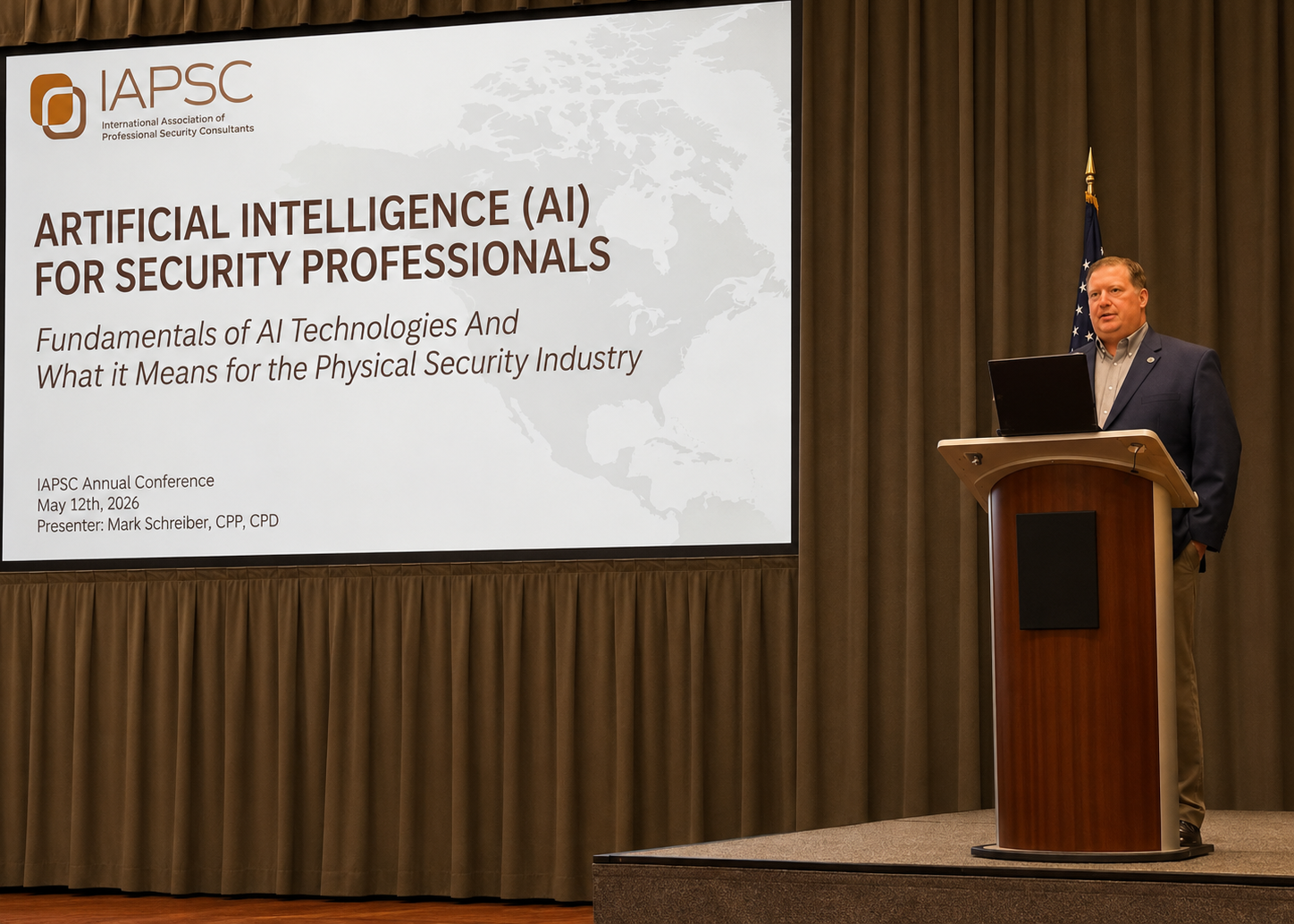
Safeguards Consulting, Inc. was proud to participate in the International Association of Professional Security Consultants (IAPSC) 2026 Conference, May 11 - May 13, 2026, in Chandler, Arizona, at the Gila River Resorts and Casino. During the conference, we joined numerous security leaders and industry professionals from around the world for a week of education, collaboration, and forward-thinking discussions. 

As part of the conference program, our President and Principal Consultant, Mark Schreiber, presented a new session topic titled "Artificial Intelligence 101 for Security Professionals." The presentation was designed to provide attendees with a practical foundation in artificial intelligence and its growing influence on the physical security industry.  

During the session, Schreiber explored key AI concepts and terminology, helping demystify a rapidly evolving technology that is increasingly becoming part of everyday security operations. Attendees gained insight into current and emerging AI applications, as well as the opportunities and challenges security professionals can expect to encounter as these technologies continue to develop. 

The discussion focused on real-world applications of artificial intelligence within security consulting and operations, highlighting how AI can support decision-making, enhance efficiency, improve threat detection, and strengthen overall security strategies. As organizations continue to evaluate the role of AI in their operations, understanding both its capabilities and limitations has become increasingly important for security practitioners. 

As both a presenter and a member of the IAPSC Board of Directors, Schreiber valued the opportunity to engage with fellow consultants and security leaders throughout the conference.  

Reflecting on the experience, he shared, “In addition to being a great educational conference, the knowledge sharing during the networking events was of great value in itself.” 

Safeguards Consulting extends its appreciation to everyone who attended the session, participated in discussions, and contributed valuable perspectives on the future of artificial intelligence in security. The level of engagement demonstrated the industry's commitment to embracing innovation while maintaining the highest standards of professional practice. 

The firm also thanks the IAPSC for hosting another exceptional conference and for its continued dedication to advancing the security consulting profession through education, networking, and professional development opportunities. 

As artificial intelligence continues to shape the future of security, Safeguards Consulting remains committed to helping clients and industry professionals understand emerging technologies and leverage them to create safer, more effective security programs. 

To read more about IAPSC, click:  

Home - International Association of Professional Security Consultants 

To stay more up to date with our team, consider subscribing to our free newsletter at:  

Newsletter Signup — Safeguards Consulting, Inc. 

How Facilities Become Vulnerable Over Time

Security issues in facilities rarely emerge all at once. In most cases, they develop gradually as systems age, operations evolve, and small gaps go unnoticed or unaddressed. What begins as minor inconsistencies in access, maintenance, or procedures can compound over time, eventually creating significant exposure. 

Facilities are constantly changing environments. Employees shift roles, departments are reorganized, spaces are repurposed, and technology continues to age. When security measures are not reviewed and adjusted alongside these changes, misalignment begins to take hold. Over time, that misalignment can quietly weaken even well-designed security programs. 

Small Gaps Add Up Over Time 

Most security vulnerabilities are not caused by a single failure or oversight. Instead, they are the result of incremental changes that seem insignificant in isolation. A door that no longer closes properly, a badge that was never deactivated, or a maintenance task that gets deferred may not raise concern on their own. 

However, these issues rarely stay isolated. As they accumulate, they begin to interact with one another, creating broader weaknesses across the facility. A door issue that is not detected by an access control system, for example, can allow for unauthorized entry into a facility. 

Aging Systems Lose Effectiveness 

Security systems are often expected to perform indefinitely, but every component, including cameras, sensors, locking systems, and other security hardware, has a defined lifecycle. Over time, performance begins to decline. Cameras lose image clarity; sensors become less reliable, and system components may no longer integrate effectively with newer technology. 

One of the biggest challenges is that these systems often continue to function at a basic level, giving the impression that they are still effective. In reality, their ability to detect, deter, or respond may be significantly reduced. 

Access Control Gradually Expands 

Access control is one of the most common areas where risk develops over time. As employees take on new roles or responsibilities, their access is often expanded but not always reduced when it is no longer needed. Temporary access for contractors or project work can also remain in place longer than intended. 

This gradual accumulation of permissions, commonly referred to as “access creep,” reduces visibility and control. Over time, it becomes difficult to confidently answer who has access to specific areas and whether it is still appropriate. 

Procedures Become Outdated 

Security and emergency procedures are typically developed based on how a facility operates at a specific point in time. As operations evolve, those procedures do not always keep pace. 

For example, an evacuation plan may reference outdated layouts, or response procedures may depend on individuals who are no longer in those roles or technologies that have changed. While the intent of the procedure may still be valid, its effectiveness is reduced when it no longer reflects real conditions. 

Ownership and Oversight Can Drift 

Over time, responsibility for security systems and processes can become less clearly defined. Organizational changes, shifting priorities, or staffing transitions can all contribute to gaps in oversight. 

Even when systems remain in place, a lack of consistent ownership can lead to missed updates, delayed maintenance, and inconsistent policy enforcement. In many cases, the issue is not the technology itself, but the absence of accountability for managing it. 

Vulnerability Often Goes Unnoticed Until It Matters 

One of the most challenging aspects of gradual security decline is that it is not immediately visible. Daily operations continue as expected, and issues may remain hidden until they are exposed during an incident, audit, or system failure. 

When this happens, vulnerabilities that developed over months or years can surface all at once, often requiring urgent and costly remediation. 

Practical Steps to Stay Ahead of Risk 

Preventing gradual security decline requires a consistent and proactive approach. Organizations should establish routine processes to identify and resolve small issues early, before they accumulate into larger concerns. Regular walkthroughs, maintenance checks, and periodic security reviews can make a meaningful difference. 

It is also important to manage security technology intentionally. Systems should be evaluated regularly, updated, tested for performance, and replaced according to defined lifecycle expectations to ensure they remain effective and compatible with current needs. 

Operational privileges (e.g. access control) should be reviewed on an ongoing basis, with permissions aligned to current roles and responsibilities. Formal processes for granting, auditing, and removing privileges help maintain visibility and minimize unnecessary exposure. 

Procedures and emergency plans should be revisited periodically to confirm they reflect current operations. Conducting drills or tabletop exercises can help validate that plans are both accurate and practical. 

Finally, clear ownership of security responsibilities is essential. Defining accountability for system management, maintenance, and policy enforcement helps ensure that critical tasks are consistently addressed and not overlooked over time. 

Facilities do not become vulnerable overnight. Risk builds slowly when systems, access, and procedures are not actively maintained and aligned with current operations. 

Maintaining security effectiveness requires continuous attention, including reviewing systems, validating procedures, and ensuring controls reflect how the organization operates today. 

At Safeguards Consulting, we support organizations by identifying where this type of gradual misalignment has occurred and helping bring systems, procedures, and controls back into alignment. 

If it has been some time since your facility has undergone a comprehensive review, it may be worth taking a closer look before small gaps become larger risks. 

Release of the April 2026 Safeguards Consulting Chronicle

Our team is proud to share that we recently released the April issue of our firm's monthly newsletter, The Safeguards Consulting Chronicle, and we would love to invite you to subscribe for free.  

Our newsletter covers numerous industry events, news, and updates.  

Some of the items we included in our April issue were:       

+ A featured friend spotlight piece on our friend and client, Brigham Young University (BYU) 

+ An exclusive article written by our Marketing and Design Operations Specialist, Harris Rowe, entitled “Leveraging CPTED to Extend Security Layers Through Natural Access Control”.  

+ A list of beneficial industry events that include events we are supporting/speaking at, as well as other events we recommend attending.      

+ Our list of useful blog articles.       

+ A selection of key industry news and updates.       

+ A quick industry tip provided by our experts.      

This month’s “Featured Friend” will also feature our friend and client, Loma Linda University!  

If interested, please subscribe using the hyperlink included below.     

Newsletter Signup — Safeguards Consulting, Inc.

When you subscribe to our newsletter, you gain access to all the exclusive security content mentioned above, as well as our newsletter archive, so that you never miss an issue! We hope these resources will help you in your role as a security professional. It also allows us to keep you updated regarding company news, updates, or events.

The Top Benefits of the Chief Executive’s Chief Security Officer (CSO) Group

Safeguards Consulting is proud to highlight the many benefits of joining the Chair of the Chief Security Officer (CSO) Group, which is under our new industry partner, the Chief Executive Group (CEG). Our President and Principal Consultant, Mark Schreiber, has recently taken on the role of Chair for this group within the Chief Executive Network (CEN), which operates under CEG. This collaboration opens exciting opportunities and resources for members of the CSO Group within the broader Chief Executive Network (CEN).  


What Is The Chief Executive Network (CEN)?  

The CEN is a high-performance organization that embraces diverse cultures and professional experiences, dedicated to enhancing executive performance and fostering overall professional growth. Their mission is to drive business growth while strengthening communities and society through a holistic approach. 

There are two subgroups within the CEN:  

1. The Senior Executive Network (SEN) 

2. The Chief Security Officer Group (CSO)  


Defining The Senior Executive Network (SEN) 

The SEN is united by a shared commitment to advancing the well-being and success of professionals worldwide through collaboration, knowledge exchange, and strategic networking. Its core objectives include navigating disruption effectively, minimizing errors, accelerating growth, optimizing time and cost efficiency, and enhancing profitability. Tailored to meet the diverse needs of industry leaders, SEN offers a range of targeted benefits designed to capitalize on opportunities and drive operational excellence across various professional roles. 


A Niche Group Just for Security Professionals: The Chief Security Officer (CSO) Group  

The Chief Security Officer (CSO) Group serves as a global hub for leading security professionals of the highest caliber. Amid rapid technological innovation, the specialized security sector continues to expand, underscoring the increasing demand for expert security knowledge. This expertise has become integral to organizations’ daily operations, ensuring enhanced safety measures and robust security frameworks. 


The Top 9 Key Benefits of the CSO Group 

The CSO Group offers a wide range of benefits and incentives designed to support security industry professionals, enhance their career development, and strengthen their professional standing. Additionally, the group facilitates international collaboration by fostering a global network within the security sector. 

The Top 9 Key Benefits of the Group:  
1. Opportunity to collaborate with experienced and like-minded security professionals.  

2. Access to valuable insights from Chief Security Officers navigating similar challenges.  

3. Collective problem-solving to address complex and evolving security threats.  

4. Deepened awareness and intuitive understanding of the specialized security industry.  

5. Participation in strategically formed networks of CSOs and security directors.  

6. Continuous enhancement of knowledge and professional expertise.  

7. An inclusive and welcoming community fostering open dialogue and support.  

8. A secure and confidential setting specifically designed to foster open dialogue and trust.  

9. A group with a careful curation process to ensure that no direct competitors are placed together, preserving the integrity and confidentiality of discussions.    

What Can I Expect to Discuss Within the CSO Group?  

Given the secure, confidential, and non-competitive nature of the discussion environment, members benefit from exclusive access to specialized insights and practical guidance from experienced peers who have confronted similar challenges and successfully navigated complex security landscapes. This distinctive platform for exchanging candid experiences and innovative solutions empowers members to tackle their most pressing issues with assuredness and discretion. 

Past and current key priority topics addressed include: 

+ The Evolving Risk Landscape  

+ Balancing Security with Employee Experience  

+ Consistency in Security Protocols Across Locations  

+ Demonstrating ROI on Security Investments  

+ Recruitment and Retention of Skilled Personnel  

+ Crisis Management and Incident Response Preparedness  

+ Adoption of Cutting-Edge Security Technologies  

And so many more!

Are You Interested in Learning More?  

If you would like to inquire about more information on the group, please contact us at:   

Contact — Safeguards Consulting, Inc. 

To learn more, visit:   
Chief Executive Group (CEG): Chief Executive Group 
Senior Executive Network (SEN): Senior Executive Network 
CSO Peer Group (CSO): CSO Peer Network | Senior Executive Network 

To learn more about our team’s involvement, visit:  

Introducing the Chief Executive Network’s Exclusive CSO Group — Safeguards Consulting, Inc. 

Inside the Chief Executive Network’s Dynamic CSO Brunch at ISC West — Safeguards Consulting, Inc.

Top Security Leaders Unite: Inside the Chief Executive Network’s Dynamic CSO Brunch at ISC West

Safeguards Consulting is pleased to share that at the start of the new year, our team embarked on an exciting and dynamic new partnership with our friends at the Chief Executive Group, while our President and Principal Consultant, Mark Schreiber, also began his role as Chair of the Chief Security Officer (CSO) Group within the Chief Executive Network. 

This year’s ISC West Conference had numerous highlights for our team:  

+ Schreiber hosted two impactful sessions 

+ We had a first-time attendee from our team  

+ Schreiber was awarded the prestigious Sandy Jones Volunteer of the Year Award 

+ Our team enjoyed numerous sessions and networking opportunities  

Additionally, this year’s conference also marked a big milestone for our firm as we hosted a private brunch meeting at CEN’s CSO Group during the conference.  

The brunch was hosted at Yardbird Table and Bar in Las Vegas, renowned for its family-recipe fried chicken and one of the finest bourbon selections in the country. Attendance was limited to an intentionally small, invitation-only group of distinguished CSOs and Security Directors, creating an exclusive and highly focused discussion. 

The schedule for the meeting included:  

+ Breakfast and Attendee Introductions 

+ An Overview of the CSO Peer Network and Meeting Processes 

+ A Facilitated CSO Peer Meeting 

+ Lunch with Peer Q&A and Follow-Up Discussions 

Every CSO Group meeting provides its members to convene in a dedicated, secure environment specifically designed to foster open dialogue and trust.  

Within this confidential setting, participants gain access to specialized insights and practical advice from seasoned peers who have faced similar challenges and successfully navigated complex security landscapes. This unique opportunity to exchange candid experiences and innovative solutions helps members address their most urgent concerns with confidence and discretion.   

Furthermore, the group’s careful curation process ensures that no direct competitors are placed together, preserving the integrity and confidentiality of discussions.   

By strategically organizing senior security executives into peer groups composed exclusively of contemporaries from the same industry sector, the group cultivates a collaborative atmosphere where members can engage freely, knowing their proprietary information and strategic challenges remain protected. This thoughtful approach not only enhances the value of the collective wisdom shared but also strengthens professional networks based on mutual trust and respect.  

Our team is proud to share the success of this month’s special ISC West meeting, and we look forward to continuing to assist CEN and lead with the planning events of the future CSO Group’s meetings.  

Additional updates on the CSO peer group and related initiatives will be shared as the group’s work progresses.   

If you would like to inquire about more information on the group, please contact us at  

Contact — Safeguards Consulting, Inc. 

To learn more, visit:   
Chief Executive Group (CEG): Chief Executive Group 
Senior Executive Network (SEN): Senior Executive Network 
CSO Peer Group (CSO): CSO Peer Network | Senior Executive Network 

To learn more about our team’s involvement, visit:  

Introducing the Chief Executive Network’s Exclusive CSO Group — Safeguards Consulting, Inc. 

Keeping Facility Security Aligned Through Organizational Change

Change is a natural part of running any organization. Teams grow and shift, departments reorganize, spaces get renovated, and business priorities evolve. These changes are often positive, but they can introduce risk when facility security is not reviewed alongside them. 

Facilities do not operate in isolation. They reflect how an organization actually works, who comes and goes, how spaces are used, and where people and assets need protection. When that reality changes, but security systems and procedures stay the same, blind spots can start to form. 

As Roles Change, Access Should Too 

Organizational change almost always affects who needs access to what. Employees take on new responsibilities, teams are reorganized, and new personnel, such as contractors or temporary staff, are brought in to meet changing demands. 

Without a deliberate review, access permissions tend to drift. People often keep access they no longer need, while others receive broad permissions simply to keep operations moving. Over time, those small decisions add up, creating unnecessary exposure and making it harder to understand who truly has access to critical areas. 

Revisiting access control during periods of change helps ensure permissions align with current roles, not past ones. 

Procedures Often Fall Out of Sync 

Emergency response plans and security procedures are usually built around how an organization is structured at a specific moment. Reporting lines, decision‑makers, and communication paths are all factored in. 

When leadership changes or teams are restructured, those plans don’t always get updated. In an emergency, outdated procedures can slow response or cause confusion about who’s responsible for what. Even well‑trained staff can struggle if the plan no longer reflects how the organization actually operates. 

Keeping procedures aligned with current workflows is a critical, but often overlooked, step in maintaining effective life‑safety and security readiness. 

Security Ownership Can Become Unclear 

Organizational change can also blur responsibility. When departments merge or leadership roles shift, it is not always clear who owns security systems, policies, or oversight. 

Even when technology remains in place, unclear accountability can weaken the program. Tasks such as access reviews, system monitoring, maintenance planning, and policy enforcement may become deprioritized or overlooked entirely. Over time, that lack of ownership erodes confidence in the system and increases risk. 

Strong security depends as much on clear responsibility as it does on technology. 

Upgrading Technology Is Not the Same as Reducing Risk 

Many organizations respond to change by adding new security systems or upgrading existing ones. While those investments can improve capability, they don’t automatically solve underlying issues. 

If system configuration, integration, and policy alignment aren’t reviewed, new tools may not be used effectively. Features go unused, systems do not talk to each other, and access remains misaligned. In some cases, modernization adds complexity without actually improving security outcomes. 

Technology works best when it is intentionally aligned with current risks and operations. 

Change Without Review Creates Blind Spots 

The common thread is simple: organizational change creates security blind spots unless facility security is intentionally reviewed and adjusted. These gaps are rarely obvious at first, but they tend to surface at the worst possible time, during an incident, audit, or operational disruption. 

Taking a proactive approach helps organizations identify and address issues early, before they impact people, property, or continuity. 

At Safeguards Consulting, our team supports organizations by evaluating facility security following organizational change and helping ensure systems, procedures, and controls align with how the organization operates today. 

If your organization has experienced change recently, it may be time to take a fresh look at your facility's security. 

Release of the March 2026 Safeguards Consulting Chronicle

Our team is proud to share that we recently released the March issue of our firm's monthly newsletter, The Safeguards Consulting Chronicle, and we would love to invite you to subscribe for free.  

Our newsletter covers numerous industry events, news, and updates.  

Some of the items we included in our March issue were:       

+ A featured friend spotlight piece on our friend and industry partner, ASIS International.   

+ An exclusive article written by our Security Consultant, David Reeder, entitled “Are You Receiving Value from Your Contract Security Guarding Company?”.  

+ A list of beneficial industry events, that includes events we are supporting/speaking at, as well as other events we recommend attending.      

+ Our list of useful blog articles.       

+ A selection of key industry news and updates.       

+ A quick industry tip provided by our experts.      

This month’s “Featured Friend” will also feature our friend and client, Brigham Young University (BYU).  

If interested, please subscribe using the hyperlink included below.     

Newsletter Signup — Safeguards Consulting, Inc. 

When you subscribe to our newsletter, you gain access to all the exclusive security content mentioned above, as well as our newsletter archive, so that you never miss an issue! We hope these resources will help you in your role as a security professional. It also allows us to keep you updated regarding company news, updates, or events. 

Safeguards Consulting’s Mark Schreiber Honored with Sandy Jones Volunteer of the Year Award at ISC West’s Advance 2026

Safeguards Consulting is proud to congratulate our President and Principal Consultant, Mark Schreiber, on receiving the prestigious Sandy Jones Volunteer of the Year Award. The honor was presented this Tuesday, March 24, at 10:30 a.m. during The Advance 2026, held at The Venetian Expo as part of ISC West.  

Named in tribute to Sandra Jones, Principal of Sandra Jones and Company, a dedicated Security Industry Association (SIA) volunteer, and co-founder of the executive conference Securing New Ground, the Volunteer of the Year Award recognizes an SIA volunteer who demonstrates exceptional dedication to expanding SIA’s programs and services. This distinguished award is presented annually during The Advance, SIA’s flagship membership event at ISC West. 

Over the years, Schreiber has served through his SIA membership by:  

- Serving as a member of the Voice of the Industry (VOI) Steering Committee for Security Practitioners Advancing Real Conversations (SPARC), the Security Industry Association’s (SIA) technical end-user forum. The VOI committee provides industry insights and supplier/vendor expertise in a vendor-neutral capacity to support SPARC’s community of security practitioners and practitioner teams. 
- Volunteering as the primary author for the VOI committee’s SPARC Intelligence Report, delivering authoritative guidance on evaluating AI vendors and service providers. 
- Participating actively on multiple SIA committees and working groups, including the Learning and Development Committee, Video and Vision Subcommittee, Utilities Advisory Board, Drone Security Subcommittee, and Autonomous Solutions Working Group. 
- Engaging in the collaborative partnership between SIA and the International Association of Professional Security Consultants (IAPSC) to foster collaboration, generate impactful content, facilitate knowledge sharing, and enhance awareness within the security industry. 

Upon accepting his award, Schreiber took a moment to express his heartfelt gratitude to the Security Industry Association (SIA). He emphasized the vital role that industry professionals play in actively engaging with organizations like the SIA, noting that such involvement not only strengthens individual careers but also drives the overall growth and innovation within the industry. Schreiber also highlighted the incredible sense of camaraderie he has experienced among fellow SIA volunteers, attributing much of his motivation and success to this supportive community. He also acknowledged the unwavering dedication of the SIA staff, whose tireless efforts create a foundation for volunteer impact and industry advancement. For Schreiber, volunteering has been more than just giving back; it has been a deeply rewarding journey that has enriched him both personally and professionally. 

Congratulations once again to Schreiber for this well-deserved recognition, and congratulations also to Daniël Reichman, CEO and chief scientist of Ai-RGUS, on receiving the Sandy Jones Volunteer of the Year Award as well! Their commitment and passion continue to inspire us all and set a shining example of leadership in our industry. 

To read more about the award, visit:  

Security Industry Association Names Daniël Reichman and Mark Schreiber as 2026 Sandy Jones Volunteers of the Year - Security Industry Association 

To learn more about Schreiber’s recent involvement in SIA, click:  

Schreiber Joins SIA’s Voice of the Industry (VOI) Committee — Safeguards Consulting, Inc. 

Schreiber Aids SIA’s SPARC and VOI Committees with Their New Artificial Intelligence (AI) Report — Safeguards Consulting, Inc. 

To read the SPARC Intelligence Report: Guidance for Evaluating Artificial Intelligence Vendors/Service Providers, visit:  

SPARC Intelligence Report: Guidance for Evaluating Artificial Intelligence Vendors/Service Providers - Security Industry Association 

Release of the February 2026 Safeguards Consulting Chronicle

Our team is proud to share that we recently released the February issue of our firm's monthly newsletter, The Safeguards Consulting Chronicle, and we would love to invite you to subscribe for free.  

Our newsletter covers numerous industry events, news, and updates.  

Some of the items we included in our February issue were:       

+ A featured friend spotlight piece on our friend and industry partner, the Chief Executuve Group.   

+ An exclusive article written by our Senior Cyber Security Advisor, Michael “Mike” Holcomb, entitled “How Strong Is Your OT Cybersecurity Program?”.  

+ A list of beneficial industry events, that includes events we are supporting/speaking at, as well as other events we recommend attending.      

+ Our list of useful blog articles.       

+ A selection of key industry news and updates.       

+ A quick industry tip provided by our experts.      

This month’s “Featured Friend” will also feature our friend and industry partner, ASIS International.  

We are also proud to share that our Security Consultant, David Reeder, will be our special guest writer this month.  

If interested, please subscribe using the hyperlink included below.     

Newsletter Signup — Safeguards Consulting, Inc.

When you subscribe to our newsletter, you gain access to all the exclusive security content mentioned above, as well as our newsletter archive, so that you never miss an issue! We hope these resources will help you in your role as a security professional. It also allows us to keep you updated regarding company news, updates, or events.